You can send an email: htkim@ultrasonic-washer.com


Ht Washer Equipment Focus on washing machine equipment solutions.


Views: 0 Author: Site Editor Publish Time: 2026-01-07 Origin: Site


In modern manufacturing, cleanliness is no longer optional—it is essential. Industrial cleaning equipment plays a critical role in maintaining product quality, extending machine life, and meeting strict industry standards. From heavy manufacturing plants to precision workshops, industrial parts cleaning equipment ensures that components, tools, and surfaces remain free from contaminants that could compromise performance.
This guide explores everything you need to know about industrial cleaning equipment, how industrial parts cleaning equipment works, where it is used, and why it is vital for efficient production processes.


Industrial cleaning equipment is used to wash, disinfect, and sanitize machinery, production environments, and warehouse areas. It can also sterilize products, equipment, tools, floors, and work surfaces while removing oils, dust, metal chips, and chemical residues.
Unlike household or commercial cleaning tools, industrial cleaning equipment is engineered for high-volume, heavy-duty, and continuous operation. Industrial parts cleaning equipment is specifically designed to clean individual components with high precision, ensuring consistent quality across large production batches.
Manufacturing processes generate contaminants such as grease, coolant, carbon deposits, and microscopic particles. Without industrial parts cleaning equipment, these contaminants can cause defects, reduce efficiency, and lead to equipment failure.
Improved product quality
Extended equipment lifespan
Compliance with industry regulations
Reduced downtime
Enhanced workplace safety
Whether used before assembly, after machining, or before coating, industrial parts cleaning equipment ensures every component meets cleanliness standards.
Different applications require different types of industrial cleaning equipment. Below is a table-style overview of commonly used industrial parts cleaning equipment and their functions.
| Equipment Type | Description | Typical Applications |
|---|---|---|
| Ultrasonic Cleaning Systems | Uses high-frequency sound waves to remove contaminants | Precision parts, electronics, medical components |
| Spray Cleaning Machines | High-pressure spray removes grease and debris | Automotive parts, metal fabrication |
| Immersion Cleaning Systems | Parts submerged in cleaning solution | Heavy machinery, bulk components |
| Conveyor Cleaning Systems | Automated inline cleaning | High-volume production lines |
| Vapor Degreasing Equipment | Solvent vapor removes oils | Aerospace, precision engineering |
Each type of industrial cleaning equipment is designed to meet specific operational needs, making it essential to choose the right industrial parts cleaning equipment for your process.
Most industrial parts cleaning equipment follows a structured cleaning process:
Pre-cleaning – Removal of loose debris
Main cleaning – Use of water, solvents, or ultrasonic energy
Rinsing – Eliminates remaining residues
Drying – Prevents corrosion and water spots
Advanced industrial cleaning equipment often integrates automation, filtration systems, and temperature control to deliver consistent results with minimal manual labor.
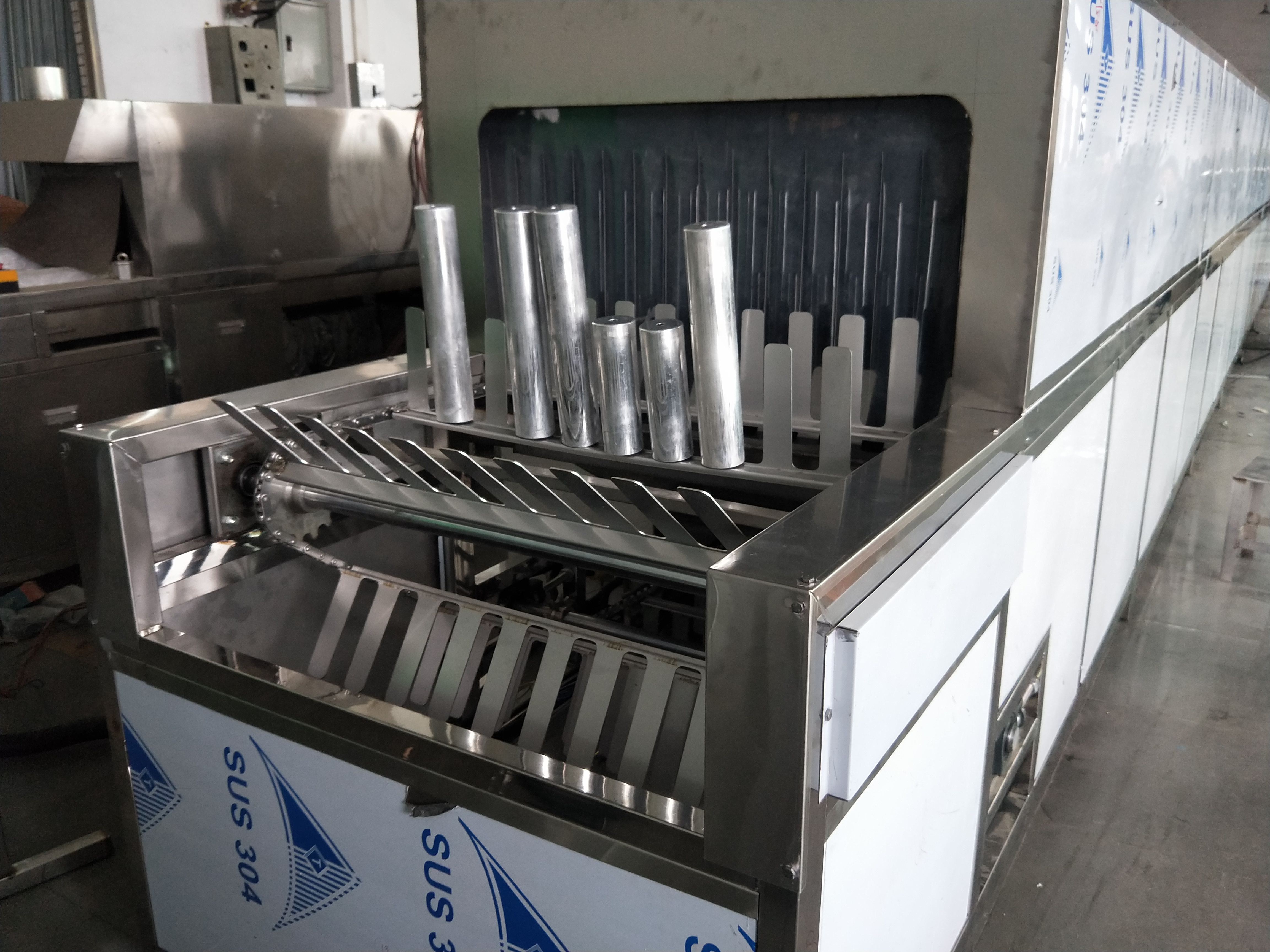
Industrial cleaning equipment is widely used across various sectors. Some of the most common industries relying on industrial parts cleaning equipment include:
Automotive manufacturing
Aerospace and aviation
Medical device production
Electronics and semiconductors
Metal machining and fabrication
Food and beverage processing
In each of these sectors, industrial cleaning equipment ensures compliance with strict cleanliness and safety standards.
Investing in high-quality industrial cleaning equipment delivers measurable advantages:
Higher productivity through faster cleaning cycles
Lower maintenance costs due to cleaner machinery
Consistent cleaning quality with industrial parts cleaning equipment
Reduced labor costs through automation
Environmental efficiency using filtered and reusable solutions
Reliable industrial parts cleaning equipment directly impacts operational efficiency and long-term profitability.
Selecting the best industrial cleaning equipment requires evaluating several factors:
Type and size of parts
Level of contamination
Required cleanliness standards
Production volume
Available floor space
The right industrial parts cleaning equipment should align with your production goals while offering scalability for future expansion.
Regular maintenance ensures industrial cleaning equipment performs at peak efficiency. Proper filtration, solution replacement, and inspection routines extend the lifespan of industrial parts cleaning equipment.
Safety features such as enclosed systems, temperature control, and automated handling reduce risks for operators and ensure compliance with workplace safety regulations.

Industrial cleaning equipment is used to wash or disinfect machinery and the production or warehouse area. It may also be used to sterilize products, equipment, tools, floors, or work surfaces and to purify or clean products by removing impurities. Industrial parts cleaning equipment is specifically designed to clean components thoroughly and consistently in industrial environments.
The future of industrial cleaning equipment is driven by automation, sustainability, and digital monitoring. Smart industrial parts cleaning equipment now integrates sensors, programmable controls, and eco-friendly cleaning agents to reduce water and energy consumption.
Manufacturers adopting next-generation industrial cleaning equipment gain a competitive advantage through improved efficiency and compliance.
When choosing reliable and high-performance industrial cleaning equipment, Hengtai stands out as a trusted solution provider. Hengtai specializes in advanced industrial parts cleaning equipment designed for precision, durability, and efficiency across multiple industries.
Email: htkim@ultrasonic-washer.com
Phone: +86 13690655506
If you are looking for dependable industrial cleaning equipment and expertly engineered industrial parts cleaning equipment, Hengtai offers professional solutions tailored to your production needs.


