You can send an email: htkim@ultrasonic-washer.com


Ht Washer Equipment Focus on washing machine equipment solutions.


Views: 0 Author: Site Editor Publish Time: 2026-01-12 Origin: Site


Have you ever wondered how delicate medical instruments or complex machinery parts get spotlessly clean? The secret often lies in a powerful piece of cleaning equipment known as an ultrasonic cleaning machine. This technology offers a level of deep cleaning that traditional methods simply cannot match, reaching into tiny crevices and removing stubborn contaminants without harsh scrubbing or abrasive chemicals. It represents a significant leap forward in cleaning, especially for industrial and commercial applications where precision is paramount.
This article will explore the world of the ultrasonic cleaning machine. We will uncover the science behind its operation, examine its wide-ranging applications, and compare it to other types of industrial cleaning equipment. Whether you are in manufacturing, healthcare, or electronics, understanding how this advanced cleaning equipment works can revolutionize your maintenance and production processes. We will also detail the key benefits and help you determine if an ultrasonic cleaning machine is the right solution for your specific needs.
An ultrasonic cleaning machine uses high-frequency sound waves to create a powerful yet gentle cleaning action. The process, called cavitation, is the core of how this advanced cleaning equipment functions. It all starts when transducers, typically attached to the bottom or sides of a stainless steel tank, generate ultrasonic waves. These sound waves travel through a specially formulated cleaning solution, creating millions of microscopic bubbles.
These bubbles are not ordinary; they rapidly expand and then violently collapse, or implode, when they come into contact with the surface of an item being cleaned. This implosion creates a tiny but intense jet of liquid and a significant amount of energy, which dislodges contaminants like dirt, oil, grease, and grime from the surface. Because the bubbles are so small, they can penetrate intricate features, blind holes, and threaded areas that are impossible to reach with brushes or sprays. This makes the ultrasonic cleaning machine an indispensable tool for thorough and precise cleaning.


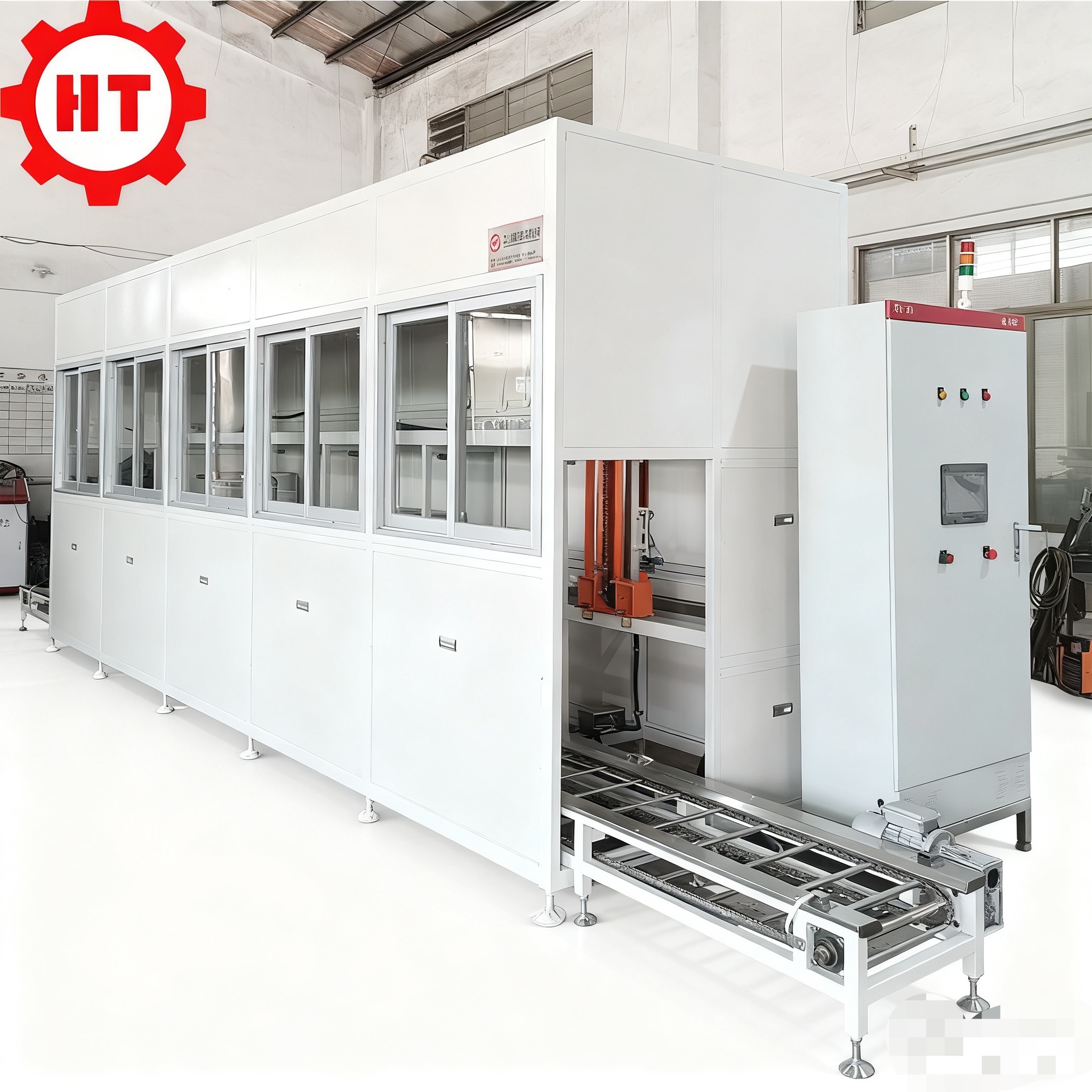
Understanding the operational flow of an ultrasonic cleaning machine can help illustrate its efficiency. While specific models of this industrial cleaning equipment may vary, the fundamental process remains consistent.
Filling the Tank: The process begins by filling the tank of the ultrasonic cleaning machine with a water-based cleaning solution. The choice of solution depends on the type of material being cleaned and the contaminants that need to be removed.
Degassing the Solution: Before starting the cleaning cycle, the solution must be degassed. This step removes dissolved gases from the liquid, which enhances the cavitation process and ensures the ultrasonic waves can work at their full potential. Most modern ultrasonic cleaning machines have a built-in degassing function.
Loading the Parts: Items to be cleaned are placed in a basket or tray and submerged in the solution. It is important not to overload the machine or let items rest directly on the bottom of the tank, as this can dampen the ultrasonic waves and lead to uneven cleaning. Setting the Cycle: The operator sets the temperature and timer. Heat helps to loosen contaminants and improves the effectiveness of the cleaning solution, while the cycle duration depends on the level of soiling.
Activating the Ultrasonics: The ultrasonic generators are turned on, starting the cavitation process. The tiny bubbles form and implode against the parts, scrubbing them clean at a microscopic level. This phase is where the deep cleaning power of this advanced cleaning equipment is unleashed.
Rinsing and Drying: Once the cycle is complete, the parts are removed from the ultrasonic cleaning machine and rinsed to remove any residual cleaning solution and dislodged dirt. They are then dried, leaving a perfectly clean surface.
This systematic approach makes the ultrasonic cleaning machine a reliable and repeatable piece of industrial cleaning equipment.
The versatility of the ultrasonic cleaning machine makes it a valuable asset across numerous industries. Its ability to clean without causing damage to delicate components is a key advantage. This type of industrial cleaning equipment is essential where cleanliness directly impacts performance, safety, and quality.


For example, in the automotive sector, an ultrasonic cleaning machine is used to clean fuel injectors, carburetors, and engine parts, restoring them to optimal performance. The aerospace industry relies on this cleaning equipment for maintaining critical components where even microscopic contamination can lead to failure. In manufacturing, it's used to clean newly machined parts, removing oils and metal shavings before the next stage of production. The ultrasonic cleaning machine has proven its worth as an essential tool.
Industry | Common Applications | Key Benefits |
|---|---|---|
Medical & Dental | Cleaning surgical instruments, dental tools, prosthetics | Sterilization-ready cleanliness, prevents cross-contamination |
Manufacturing | Removing oils, coolants, and debris from machined parts | Improves product quality, prepares surfaces for coating |
Electronics | Cleaning printed circuit boards (PCBs), electronic components | Removes flux and contaminants without damaging solder joints |
Automotive | Degreasing engine blocks, cleaning fuel injectors, restoring parts | Enhances part performance and longevity |
Jewelry | Removing polish, dirt, and oils from intricate pieces | Restores brilliance without scratching delicate metals or stones |
Aerospace | Precision cleaning of hydraulic components, engine parts | Ensures reliability and safety of critical flight systems |
As shown, the impact of this industrial cleaning equipment is far-reaching, solidifying the ultrasonic cleaning machine as a cornerstone of modern maintenance and production.
When compared to other types of industrial cleaning equipment, the ultrasonic cleaning machine offers distinct advantages. Manual scrubbing is labor-intensive, time-consuming, and often inconsistent. It also risks damaging sensitive parts with abrasive brushes. High-pressure spray washers can be effective for surface-level dirt but struggle to clean complex geometries and can also damage delicate items.
Chemical solvent baths can be effective but often involve hazardous materials that pose risks to employees and the environment. An ultrasonic cleaning machine, however, provides a safer, faster, and more thorough solution. The process is automated, reducing labor costs and ensuring consistent results every time. It uses water-based, biodegradable detergents, making it a more environmentally friendly choice. For any business looking to improve its cleaning processes, investing in this advanced cleaning equipment is a logical step forward. The efficiency of an ultrasonic cleaning machine is unmatched by most other cleaning equipment.
An ultrasonic cleaning machine is incredibly effective at removing a wide variety of contaminants. This includes oil, grease, wax, carbon deposits, flux agents, fingerprints, mold release agents, dust, and biological materials. Its ability to tackle both organic and inorganic soils makes this cleaning equipment highly versatile.
Yes, it is one of the safest methods for cleaning delicate items. The cleaning process is non-abrasive. Cavitation works at a microscopic level, so it cleans without scratching, pitting, or damaging intricate components, soft metals, or sensitive electronics. This makes this particular industrial cleaning equipment ideal for items that cannot withstand harsh mechanical scrubbing.
The duration of a cleaning cycle in an ultrasonic cleaning machine can range from a few minutes to an hour or more. The exact time depends on several factors, including the type and amount of contamination, the cleaning solution used, the temperature, and the material of the parts being cleaned. Most cleaning cycles for general-purpose cleaning equipment fall within the 3- to 15-minute range.
Using a solution specifically designed for ultrasonic cleaning is highly recommended. These solutions are formulated to enhance the cavitation process and effectively break down specific contaminants. Using plain water is less effective, and employing flammable or harsh chemicals not approved for an ultrasonic cleaning machine can be dangerous and damage the equipment.
Proper maintenance ensures the longevity and performance of your industrial cleaning equipment. Regularly change the cleaning solution to prevent a buildup of contaminants, which can reduce cleaning effectiveness. Periodically wipe the tank clean. It is also important to ensure the machine is not run without solution, as this can damage the transducers. Following the manufacturer's guidelines is the best way to maintain your ultrasonic cleaning machine.
For businesses seeking a reliable and powerful cleaning solution, exploring the benefits of this advanced cleaning equipment is a worthwhile endeavor. The right ultrasonic cleaning machine can significantly enhance operational efficiency, product quality, and workplace safety.
If you are looking for top-tier industrial cleaning equipment tailored to your specific needs, consider Hengtai. With a commitment to innovation and quality, Hengtai provides robust and effective ultrasonic cleaning machine solutions for a wide range of industries.
To learn more or to discuss your requirements, please contact us:
Email: htkim@ultrasonic-washer.com
Phone: +86 13690655506


