You can send an email: htkim@ultrasonic-washer.com


Ht Washer Equipment Focus on washing machine equipment solutions.


Views: 0 Author: Site Editor Publish Time: 2026-08-24 Origin: Site


Grease, oil, and machining residue are constant challenges on the factory floor. Left untreated, they compromise coating adhesion, accelerate corrosion, and lead to costly product failures down the line. For manufacturers operating at scale, manual wiping and water-based washing simply aren't enough—precision parts need precision cleaning.
That's exactly why so many production facilities are turning to solvent-based cleaning technology. A commercial vapor degreasing machine offers a level of cleanliness that most aqueous systems struggle to match, particularly when dealing with complex geometries, blind holes, or tightly toleranced components. This post breaks down how vapor degreasing works, where it fits in modern manufacturing, and what to look for when selecting the right equipment.
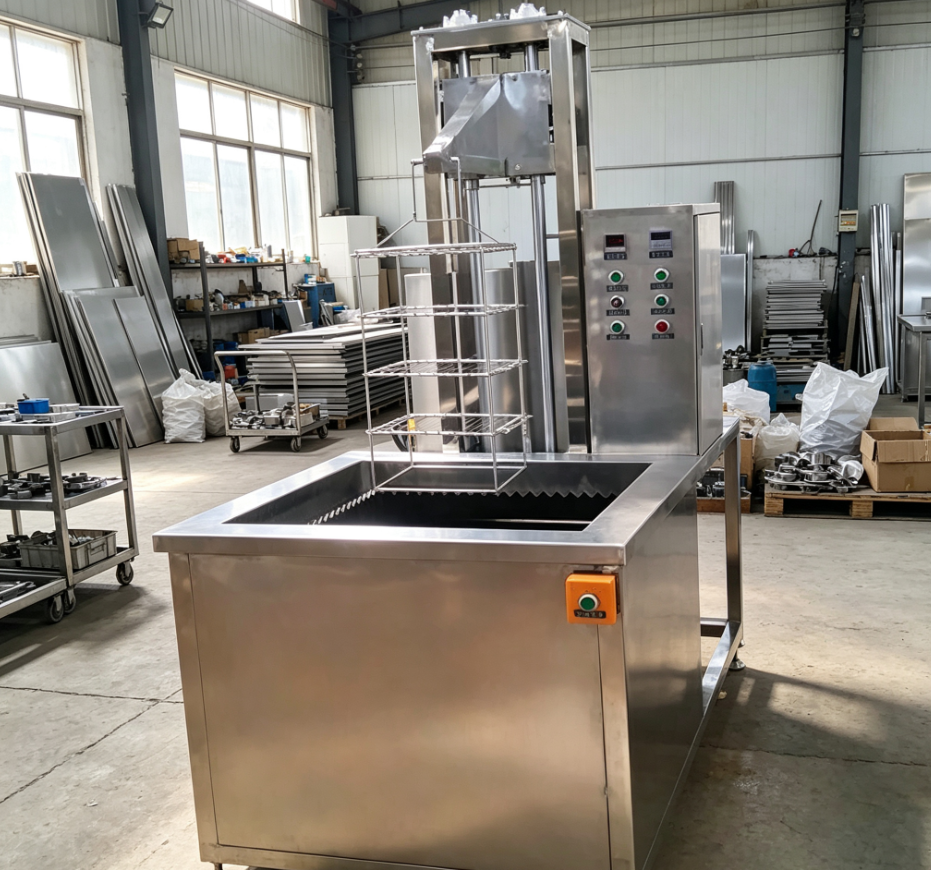
Vapor degreasing uses solvent vapors—typically heated in a sump—to dissolve and remove hydrocarbon-based contamination from metal surfaces. As the hot vapor contacts the cooler part, it condenses and carries contaminants back into the liquid sump below. The cleaned part exits dry, residue-free, and ready for the next process stage.
The process is remarkably efficient. Because the solvent continuously recycles through condensation, consumption stays low. There are no aqueous rinse stages, no drying tunnels, and no risk of water spots on sensitive components. For industries where surface cleanliness directly affects product performance—aerospace, electronics, medical devices, and precision optics—this level of cleaning consistency is non-negotiable.
Not every cleaning challenge is the same. Aqueous spray washing excels at removing water-soluble coolants and light particulate. But the moment oily residues, drawing compounds, or stamping lubricants enter the picture, solvent-based cleaning holds a clear advantage.
Here's how the two approaches compare across key performance criteria:
Criteria | Vapor Degreasing | Aqueous Spray Washing |
|---|---|---|
Oil and grease removal | Excellent | Moderate |
Complex geometry cleaning | Excellent | Limited |
Drying requirement | None (parts exit dry) | Requires drying stage |
Water spot risk | None | Possible |
Energy consumption | Low to moderate | Moderate to high |
Suitable for sensitive alloys | Yes | Depends on chemistry |
Wastewater treatment needed | No | Yes |
Cycle time | Short | Longer |
The operational simplicity of vapor degreasing is one of its most underappreciated advantages. Fewer processing stages mean fewer failure points—and lower overall running costs.
Across manufacturing sectors, the demand for reliable surface preparation keeps growing. Some of the industries that consistently benefit from solvent-based degreasing include:
Automotive components: Transmission parts, fuel injectors, and brake assemblies require contamination-free surfaces before assembly or coating.
Aerospace: Tight tolerances and strict cleanliness specifications make vapor degreasing a standard pre-treatment step.
Electronics: PCBs and micro-components cannot tolerate flux residue or particulate contamination.
Medical devices: Implants and surgical instruments must meet stringent biocompatibility standards—any trace of machining oil is unacceptable.
Optical components: Lens surfaces and housings demand spotless, streak-free cleaning that aqueous systems rarely achieve consistently.
Each of these sectors shares a common requirement: cleaning that is repeatable, verifiable, and scalable to production volumes.
Selecting the right equipment requires more than comparing tank sizes. The best industrial degreaser machine for your operation depends on part complexity, production throughput, solvent compatibility, and compliance requirements.
Consider the following when evaluating systems:
Freeboard ratio: A higher freeboard (the distance between the solvent vapor zone and the top of the tank) reduces solvent emissions and operating costs. Most modern systems are designed to minimize environmental exposure as standard.
Cooling systems: Effective refrigerated freeboard coils or water-jacketed condensers are essential for containing vapors. This affects both worker safety and solvent consumption rates.
Loading mechanism: For high-volume production, automated basket conveyors or robotic loading arms eliminate manual handling variability and protect operators from vapor exposure. For smaller batches, manual or semi-automatic configurations offer a more cost-effective entry point.
Material compatibility: Not all solvents are compatible with all substrates. Aluminum, copper alloys, and certain plastics can be affected by aggressive chemistries—confirm compatibility before committing to a configuration.
Compliance readiness: Regulations around solvent use continue to tighten. A well-designed system includes features like still recovery, carbon adsorption, and emission monitoring ports to support regulatory reporting.
Jiangmen Hengtai Cleaning Equipment Co., Ltd. has been engineering industrial cleaning solutions from its 10,000㎡ manufacturing facility in Guangdong, China. With a dedicated R&D team and a product range that spans ultrasonic cleaning systems, hydrocarbon cleaning machines, spray washing lines, and drying equipment, Hengtai provides one-stop solutions tailored to each customer's production requirements.
Hengtai's vapor degreaser systems are built with energy efficiency and automation in mind. Customers across the automotive, electronics, and precision manufacturing sectors rely on Hengtai equipment to maintain consistent cleanliness standards across high-volume production lines. Each system can be customized in terms of tank configuration, loading method, solvent compatibility, and automation level—meaning the equipment scales with your operation rather than limiting it.
Beyond equipment supply, Hengtai's engineering team assists customers with process selection, cleaning agent recommendations, and energy consumption analysis. The goal isn't simply to sell a machine—it's to solve the specific contamination challenge each manufacturer faces.
The decision between vapor degreasing and other cleaning methods comes down to three factors: the type of contamination, the part geometry, and the required cleanliness standard.
If your parts carry heavy hydrocarbon soils, feature blind bores or internal channels, and need to meet high surface energy or adhesion specifications, vapor degreasing is almost always the more reliable path. If your contamination is primarily water-soluble and your parts are simple in geometry, an aqueous spray line may be sufficient.
In many real-world operations, the two technologies are complementary rather than competing. A spray line handles bulk cleaning for straightforward parts; a degreasing system manages precision-critical components where surface quality directly affects downstream performance.
Cleaning is often treated as a secondary concern in the production process—something addressed only after problems surface. The smarter approach is to treat surface preparation as an integral step in quality control, with equipment selected to match the demands of the process rather than the minimum acceptable threshold.
Whether you're upgrading an existing line or specifying cleaning equipment for a new facility, the right system pays for itself quickly through reduced rework, improved coating adhesion, and fewer field failures.
Hengtai's engineering team is ready to help you identify the most effective, cost-efficient solution for your application. Contact Hengtai directly at htkim@ultrasonic-washer.com or visit www.ultrasonic-washer.com to explore the full product range and request a consultation.


