You can send an email: htkim@ultrasonic-washer.com


Ht Washer Equipment Focus on washing machine equipment solutions.


Views: 0 Author: Site Editor Publish Time: 2026-02-04 Origin: Site


Industrial cleaning has evolved far beyond simple scrubbing or soaking. When precision matters, businesses turn to advanced technology to remove contaminants from complex components. This brings us to a fundamental question for modern maintenance: What is an ultrasonic parts washer?
An ultrasonic parts washer is a specialized cleaning device that uses high-frequency sound waves to remove dirt, grease, oil, and other contaminants from items. Unlike a traditional parts washer that relies on high-pressure sprays or manual agitation, an ultrasonic cleaning system works on a microscopic level. It is highly effective for cleaning items with blind holes, cracks, and recesses that manual tools simply cannot reach.
This guide explores the science behind this technology, its applications, and why investing in an ultrasonic parts washer transforms your maintenance workflow.

The magic behind every ultrasonic parts washer lies in a process called cavitation. But how does this phenomenon actually occur?
The system uses a generator to create high-frequency electrical energy. Transducers attached to the tank convert this electrical energy into mechanical sound waves. These sound waves travel through the liquid cleaning solution, creating alternating high and low-pressure cycles.
During the low-pressure cycle, millions of microscopic vacuum bubbles form. When the high-pressure cycle follows, these bubbles collapse or implode with tremendous force. This implosion releases high energy, effectively blasting contaminants off the surface of the parts submerged in the tank. This action is what makes an ultrasonic cleaning system so effective. It scrubs the part clean without physically touching it with a brush.
Is manual scrubbing costing your business too much time? Many workshops still rely on solvents and elbow grease, but this approach has significant downsides.
A standard [parts washer]( might struggle with intricate geometries. An ultrasonic parts washer, however, cleans everywhere the liquid penetrates. If water can touch the surface, the cavitation process will clean it. This ensures that internal passages in carburetors, fuel injectors, or hydraulic valves are thoroughly cleaned.
Furthermore, an ultrasonic cleaning system is gentle on parts. Manual scrubbing can scratch delicate surfaces or damage sensitive components like electronics. Ultrasonic cleaning removes the grime without abrasion. It also reduces labor costs significantly. Instead of spending hours scrubbing, an operator simply loads the parts washer, sets the timer, and walks away to perform other tasks.
Which sectors rely heavily on this technology? The versatility of an ultrasonic parts washer makes it indispensable across various fields.
Mechanics use an ultrasonic parts washer to clean fuel injectors, pistons, cylinder heads, and transmission components. Carbon deposits and baked-on oil are notoriously difficult to remove by hand but lift easily in an ultrasonic bath.
Sterilization requires absolute cleanliness. Before instruments go into an autoclave, they must be free of organic matter. An ultrasonic cleaning system ensures that surgical tools, dental picks, and implants are microscopically clean.
Safety is paramount in aerospace. Hydraulic systems, turbine blades, and landing gear components must be free of debris. A precision parts washer ensures that no foreign object damage (FOD) occurs due to leftover contaminants.
Circuit boards gather dust, flux, and solder residue. Specialized ultrasonic parts washer units can clean sensitive PCBs without damaging the delicate connections, provided the correct frequency and chemistry are used.
Does simply turning on the machine guarantee a perfect result? Not necessarily. Several variables influence how well your ultrasonic cleaning system performs.
Variable | Description | Impact on Cleaning |
|---|---|---|
Frequency | Measured in kHz (kilohertz). | Low frequency (25 kHz) is aggressive for heavy parts; high frequency (40+ kHz) is gentle for delicate items. |
Temperature | Heat of the cleaning solution. | Higher heat usually improves cleaning efficiency and activates detergents. |
Chemistry | The type of soap or solvent used. | The correct solution breaks down specific contaminants like grease versus rust. |
Time | Duration of the cleaning cycle. | Too little time leaves dirt; too much time might cause surface erosion on soft metals. |
Part Placement | How parts are loaded in the basket. | Overloading prevents sound waves from reaching all surfaces effectively. |
Understanding these factors ensures you get the most out of your parts washer. Adjusting the temperature or switching detergents can turn a mediocre result into a spotless one.
Is water enough to clean your parts? While cavitation is powerful, water alone rarely suffices for industrial grime.
The ultrasonic parts washer requires a cleaning medium to facilitate the cavitation process. This solution reduces surface tension, allowing bubbles to form more easily. For removing heavy grease, an alkaline solution works best. For removing rust or scale, an acidic solution is required within the parts washer.
Using the wrong chemistry can damage your ultrasonic cleaning system tank or the parts themselves. For instance, putting aluminum parts in a highly caustic soda bath will ruin the aluminum. Always consult the manufacturer guidelines for your specific parts washer to match the chemical to the contaminant.
Can you run the machine indefinitely without care? Like any industrial equipment, an ultrasonic parts washer needs maintenance to function correctly.
The most critical task is changing the solution. Over time, the fluid becomes saturated with the oil and dirt removed from the parts. This saturation dampens the ultrasonic waves, reducing the power of the ultrasonic cleaning system.
You must also clean the tank itself. Sludge settles at the bottom, which can overheat the transducers if left unchecked. Regularly wiping down the tank and checking the electrical connections ensures your parts washer lasts for years. Additionally, checking the basket for damage is important, as the basket prevents parts from resting directly on the transducers.
Why do bubbles sometimes hinder the cleaning process initially? Fresh cleaning solution contains trapped air.
When you fill an ultrasonic parts washer with fresh liquid, dissolved gas acts as a cushion. It absorbs the ultrasonic energy rather than letting it form vacuum bubbles for cavitation. This reduces cleaning power.
A quality ultrasonic cleaning system often includes a "degas" mode. This function pulses the ultrasonic waves to drive trapped air out of the liquid quickly. If your parts washer lacks this feature, simply running the machine for 10 to 15 minutes before loading parts will achieve the same result. Degassing prepares the solution for maximum impact.
Is an ultrasonic parts washer safe to use without protection? Generally, yes, but precautions are necessary.
Operators should never put their hands directly into an active ultrasonic bath. The cavitation energy that cleans steel can also damage soft tissue and bone marrow over time. Always use the basket provided with the parts washer to lower items into the tank.
Furthermore, consider the chemistry. If your ultrasonic cleaning system uses harsh chemicals or high temperatures, standard PPE like gloves and safety glasses is mandatory. Ventilation is also key if the parts washer heats solutions that emit vapors.
Does a higher frequency mean better cleaning? It depends on what you are cleaning in the parts washer.
Low frequencies, such as 25 kHz, produce larger cavitation bubbles. When these implode, they release high energy. This is ideal for heavy cast iron parts, engine blocks, or robust tools covered in thick grease.
Higher frequencies, such as 40 kHz or 80 kHz, produce smaller bubbles. These implode with less force but are much better at penetrating tiny crevices. A high-frequency ultrasonic cleaning system is superior for delicate items like optics, jewelry, or electronics. Choosing the right frequency is critical when configuring your ultrasonic parts washer.
##Why Is Hengtai the Recommended Choice?
Where should you look for reliable equipment? When quality and durability are non-negotiable, finding a trusted manufacturer is essential.
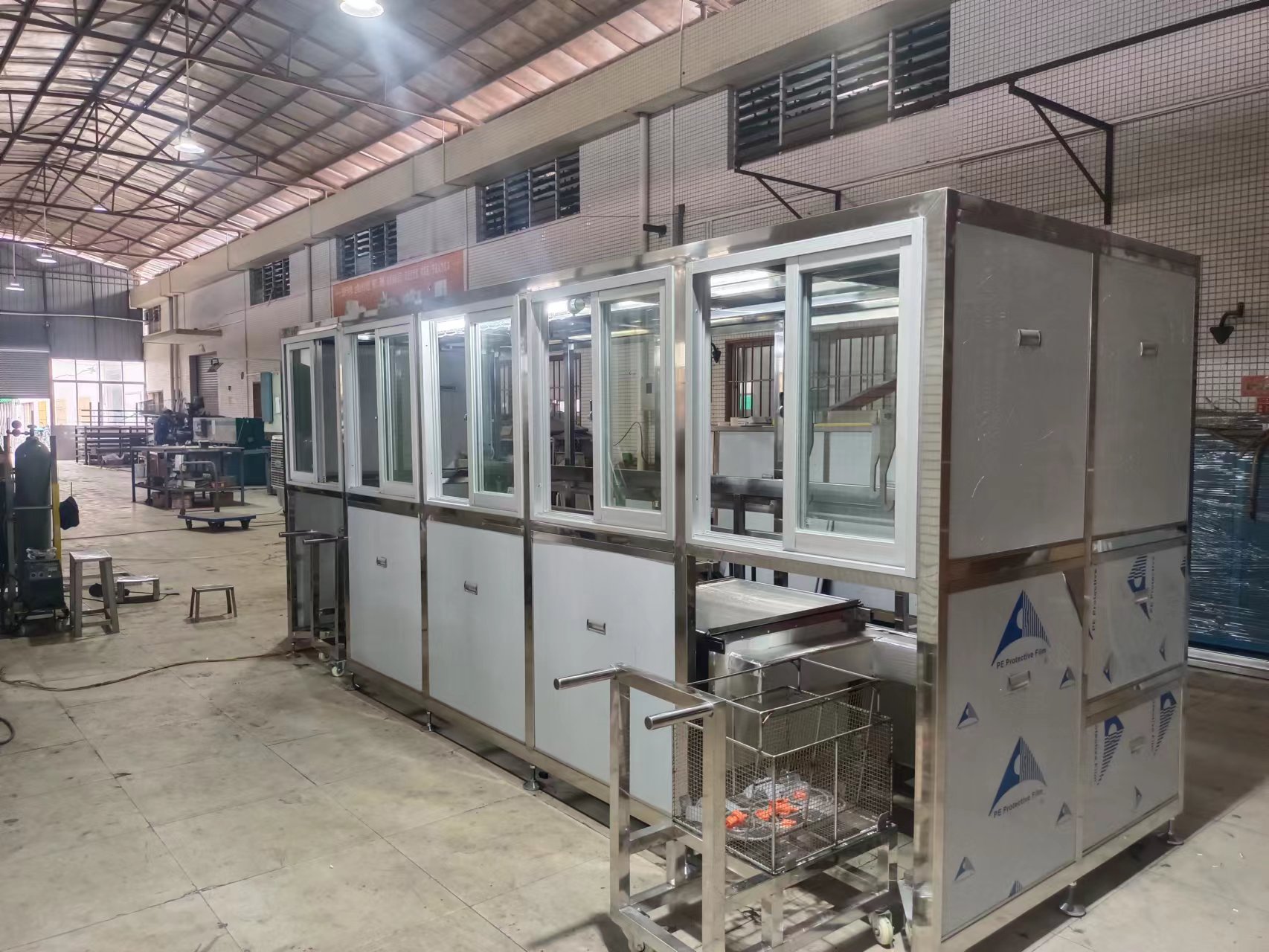
Hengtai has established itself as a leader in cleaning technology. Their range of equipment is designed to meet rigorous industrial standards. Whether you need a compact unit or a large industrial ultrasonic parts washer, Hengtai provides robust solutions.
Their systems feature advanced transducers and durable tank construction, ensuring consistent performance. Investing in a Hengtai ultrasonic cleaning system guarantees that you have the support and technology needed to streamline your cleaning operations effectively.
You should avoid putting gemstones (like opals or pearls), certain plastics, or electronics that are not rated for submersion into an ultrasonic parts washer. The vibrations can crack brittle stones or damage sensitive components. Always check the material compatibility before using your ultrasonic cleaning system.
A typical cycle in an ultrasonic parts washer takes between 3 to 10 minutes. However, heavily soiled items might require 20 minutes or more. The efficiency of the ultrasonic cleaning system usually makes it much faster than manual washing.
Yes, in most cases. Heat significantly improves the cleaning performance of an ultrasonic parts washer. Warm solution softens grease and oil, making it easier for the ultrasonic cleaning system to blast it away. Most units function best between 50°C and 65°C.
No. You should never use flammable solvents like gasoline or alcohol directly in a standard ultrasonic parts washer. The heat and ultrasonic energy can ignite the vapors, causing an explosion. Only use an explosion-proof ultrasonic cleaning system if flammable solvents are absolutely necessary.
Change the fluid when it becomes visibly dirty or when cleaning performance drops. If the ultrasonic parts washer takes longer to clean parts than usual, the solution is likely saturated. Regular changes keep your ultrasonic cleaning system operating at peak efficiency.

For more information on high-quality cleaning solutions, please contact us:
Email: htkim@ultrasonic-washer.com
Phone: +86 13690655506


