You can send an email: htkim@ultrasonic-washer.com


Ht Washer Equipment Focus on washing machine equipment solutions.


Views: 0 Author: Site Editor Publish Time: 2026-07-14 Origin: Site


Quick answer:
An ultrasonic parts washer uses high-frequency sound waves to generate microscopic bubbles that implode on contact with a surface, removing contaminants from even the most complex geometries. These systems are faster, more precise, and more eco-friendly than traditional cleaning methods—making them a preferred choice across automotive, aerospace, and medical manufacturing.
Precision cleaning is no longer a nice-to-have. For manufacturers producing tight-tolerance components, residual oils, metal shavings, and surface contaminants can compromise product quality, accelerate wear, and cause costly downstream failures. The question isn't whether to clean parts thoroughly—it's how.

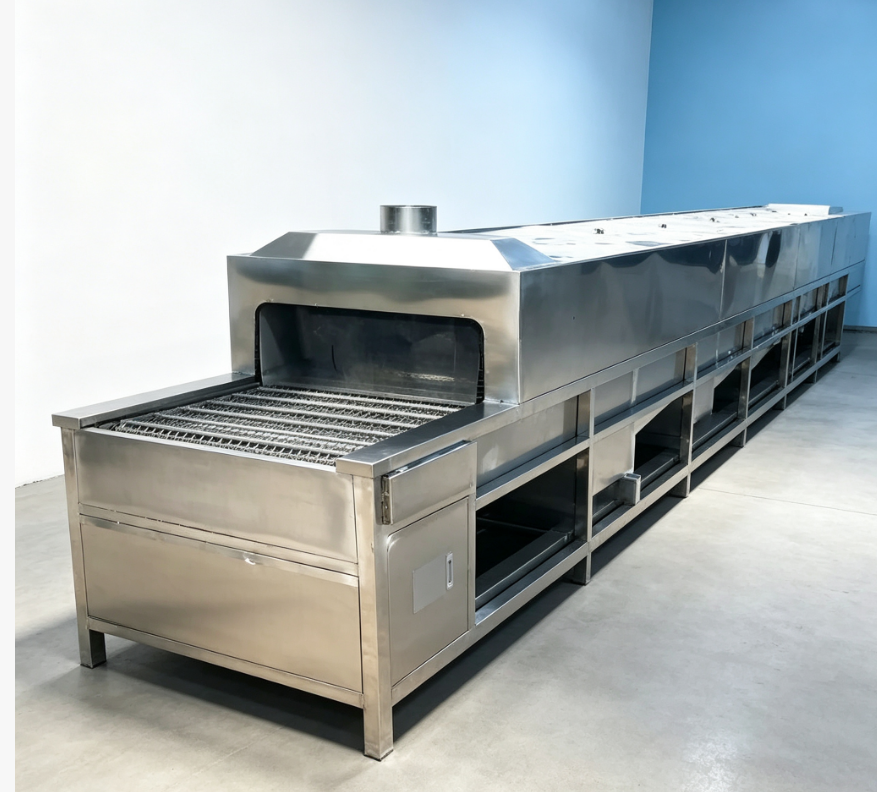
Traditional methods like manual scrubbing, solvent wiping, or pressure washing often fall short. They're labor-intensive, inconsistent, and struggle to reach blind holes, threaded bores, or intricate assemblies. That's exactly where an ultrasonic parts washer delivers a measurable advantage—consistent, automated cleaning that reaches where other methods simply can't.
This guide breaks down how these systems work, what industries rely on them most, and what to look for when selecting the right equipment for your production line.
The technology behind ultrasonic cleaning is called cavitation. A transducer converts electrical energy into ultrasonic vibrations—typically between 20 kHz and 80 kHz—which are transmitted through a liquid cleaning solution. These vibrations create millions of tiny vapor bubbles. When those bubbles collapse near a part's surface, they release intense localized energy that effectively scrubs away contaminants without damaging the substrate.
The result is a cleaning action that penetrates crevices, recesses, and internal channels that no brush or nozzle can reach. Cleaning times are dramatically shorter compared to manual methods, and the process is highly repeatable—critical for high-volume manufacturing environments where consistency is non-negotiable.
Ultrasonic cleaning has found a home across a wide range of sectors, each with distinct cleanliness requirements.
Industry | Common Parts Cleaned | Primary Contaminants Removed |
|---|---|---|
Automotive | Engine blocks, fuel injectors, brake components | Grease, carbon deposits, metallic particles |
Aerospace | Turbine blades, hydraulic fittings, fasteners | Flux residues, oxides, lubricants |
Medical & Dental | Surgical instruments, implants, dental tools | Biological residue, sterilization prep |
Electronics | PCBs, connectors, semiconductor components | Flux, solder paste, ionic contamination |
Metalworking | Stamped parts, gears, precision machined components | Cutting oils, coolants, burrs |
The common thread across all these applications is the need for contamination-free surfaces—whether to meet regulatory standards, ensure safe device function, or prepare parts for downstream processes like coating or welding.

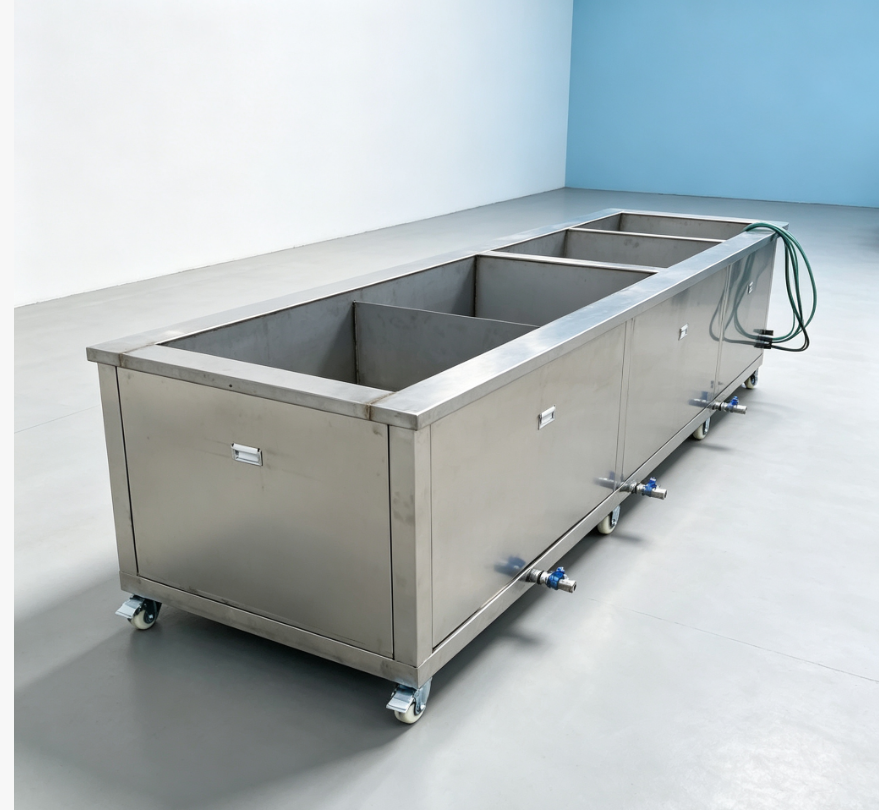
Selecting the right equipment goes beyond tank size. Several variables directly affect cleaning performance and operational efficiency.
Frequency. Lower frequencies (20–28 kHz) produce larger, more aggressive cavitation bubbles suited for heavy industrial contamination. Higher frequencies (40–80 kHz) create gentler, finer bubbles ideal for delicate components like electronics or optical parts.
Tank configuration. Single-tank systems handle straightforward applications well. Multi-stage systems—which move parts through separate ultrasonic, rinse, and drying stations—are the standard for high-throughput operations. An industrial ultrasonic cleaner with conveyor integration can process continuous part flows without interrupting production.
Automation level. Manual loading is appropriate for small batches or job shop environments. Robotic arm systems and fully automated conveyor-type configurations suit high-volume manufacturing, eliminating labor variability and improving throughput.
Cleaning chemistry. The cleaning agent must match the contaminant and the substrate. Water-based alkaline solutions work well for most industrial oils and metal chips. Hydrocarbon-based systems are preferred for sensitive alloys or where aqueous residue poses a corrosion risk.
Temperature control. Elevated cleaning temperatures—typically 40°C to 70°C—significantly improve cleaning efficiency for oils and greases. Equipment with precise temperature management gives operators more control over process outcomes.
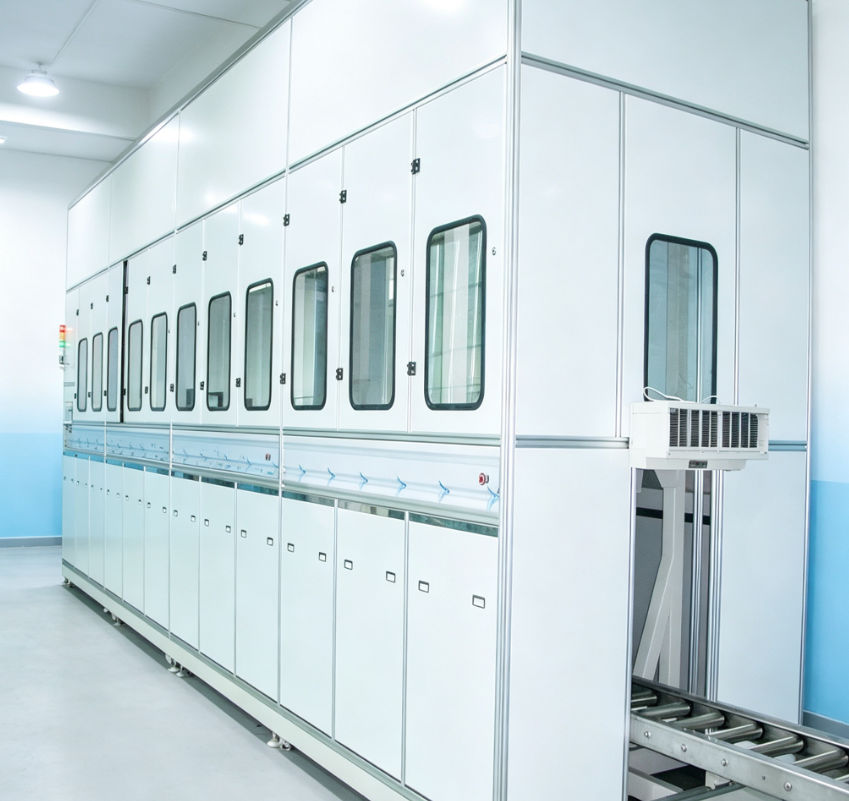

Jiangmen Hengtai Cleaning Equipment Co., Ltd. (HT Washer Equipment) has built its reputation on solving complex cleaning challenges for manufacturers across multiple industries. Operating from a 10,000 m² modern facility in Guangdong, China, Hengtai designs and manufactures a full range of industrial washing systems—from semi-automatic bench-top units to fully automated multi-stage production lines.
What sets Hengtai apart is the depth of its custom engineering capability. Rather than selling off-the-shelf equipment, Hengtai's engineering team works directly with customers to understand their specific part geometries, contamination profiles, and throughput targets—then builds a solution around those parameters.
The product lineup includes conveyor-type, robotic arm, overhead-type, and hydrocarbon ultrasonic cleaning machines, alongside high-pressure spray cleaning systems, drying equipment, and water treatment solutions. This breadth means customers can source an entire cleaning and drying line from a single supplier, simplifying project management and ensuring system compatibility.
Hengtai's systems also reflect a commitment to environmental responsibility. Energy-efficient designs and closed-loop water treatment integration help manufacturers reduce waste and lower operating costs over the long term.
For manufacturers evaluating industrial cleaning equipment, Hengtai offers technical consultations, process recommendations, and factory tours to help buyers make informed decisions before committing to a solution.
The transition from manual or pressure-based cleaning to an automated ultrasonic system typically yields measurable results within the first production cycles. Parts come out cleaner and more consistently. Labor requirements drop. And the risk of damage from abrasive or high-impact cleaning methods disappears.
That said, a successful implementation depends on proper process validation—verifying that the chosen frequency, chemistry, temperature, and dwell time actually meet the cleanliness standard required for the application. Working with an experienced equipment manufacturer streamlines this process significantly.
An ultrasonic parts washer uses cavitation to clean parts at a microscopic level, making it more effective for complex geometries, blind holes, and delicate surfaces. A high-pressure spray cleaner relies on mechanical force from water jets, which is better suited for bulkier parts with open surfaces and heavier contamination loads. Many production lines use both in sequence.
Cycle times vary by contamination type and part complexity, but most industrial ultrasonic cleaning cycles range from 3 to 15 minutes. Multi-stage systems that include rinsing and drying can complete the full process in under 30 minutes for most applications.
Ultrasonic cleaning is compatible with most metals, glass, and many hard plastics. Softer materials, certain coatings, and bonded assemblies may be affected by cavitation energy. Equipment frequency selection and process validation help ensure material safety.
Routine maintenance includes monitoring and replacing the cleaning solution, inspecting transducers for output consistency, and cleaning the tank to prevent contamination buildup. Hengtai's systems are designed for straightforward maintenance access, minimizing downtime.
Hengtai accepts inquiries via email at htkim@ultrasonic-washer.com . The team provides process recommendations based on part specifications and production requirements before any purchase commitment.


