You can send an email: htkim@ultrasonic-washer.com


Ht Washer Equipment Focus on washing machine equipment solutions.


Views: 0 Author: Site Editor Publish Time: 2026-08-14 Origin: Site


TL;DR:
Oil coating machines apply a precise, uniform layer of lubricant or protective oil onto metal parts after cleaning. Choosing the right equipment—and the right supplier—directly affects corrosion resistance, product lifespan, and production efficiency. This guide explains how oil coating machines work, what to look for in a supplier, and why partnering with an experienced manufacturer matters.
Surface protection is one of the most critical—and most overlooked—steps in metal parts manufacturing. A clean component is only half the job. Without a controlled oil coating process, freshly cleaned metal surfaces are vulnerable to oxidation, rust, and premature wear. That vulnerability costs manufacturers time, money, and customer trust.
Oil coating machines solve this problem by applying a thin, uniform film of anti-rust oil or lubricant to metal parts immediately after cleaning and drying. The result is consistent surface protection at high throughput, with minimal human error. For automotive, electronics, hardware, and precision parts manufacturers, this step is non-negotiable.
But the quality of that protection depends heavily on the machine behind it—and the expertise of the team that built it.

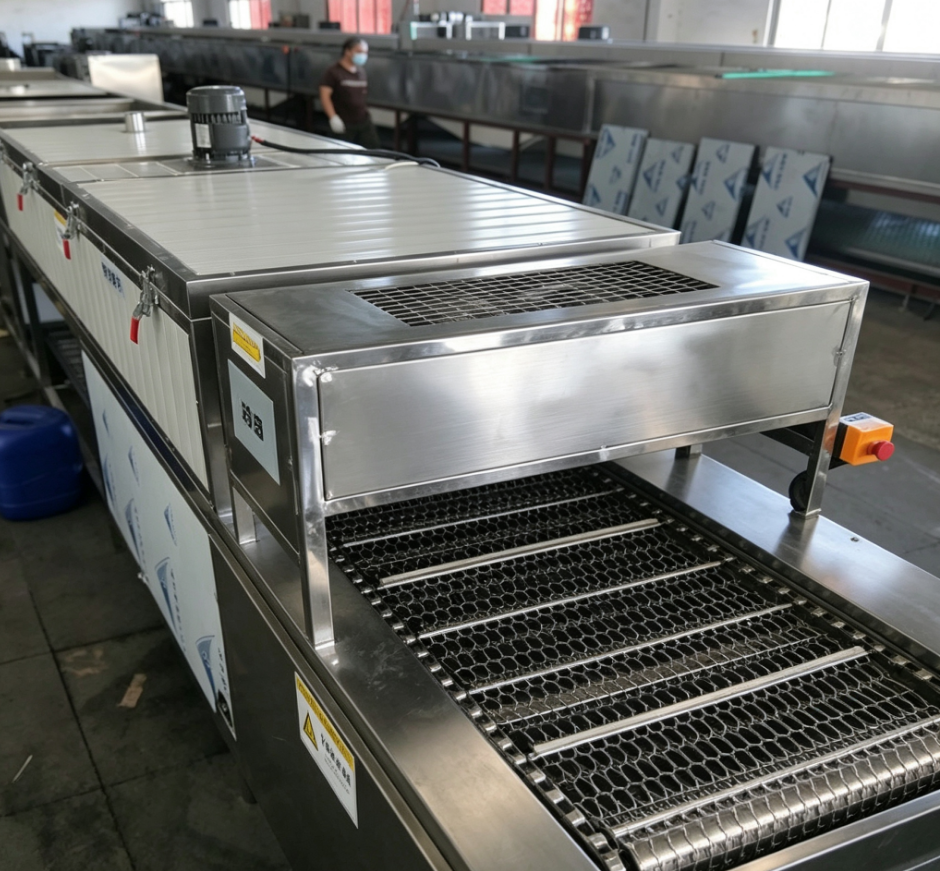
An oil coating machine passes metal parts through a controlled chamber where oil is applied via spraying, immersion, or roller contact. The method depends on the part geometry, material, and required film thickness.
Most modern systems integrate directly into existing production lines, operating in sequence after ultrasonic cleaning and drying stages. This inline configuration eliminates manual handling, reduces contamination risk, and keeps cycle times tight.
Key variables that affect coating quality include oil viscosity, application pressure, conveyor speed, and temperature. A well-engineered machine controls all of these automatically, ensuring that every part receives the same consistent treatment—whether it's the first unit of the day or the ten-thousandth.
When evaluating oil coating machine suppliers, manufacturers should ask how each of these parameters is controlled, monitored, and adjusted during production.

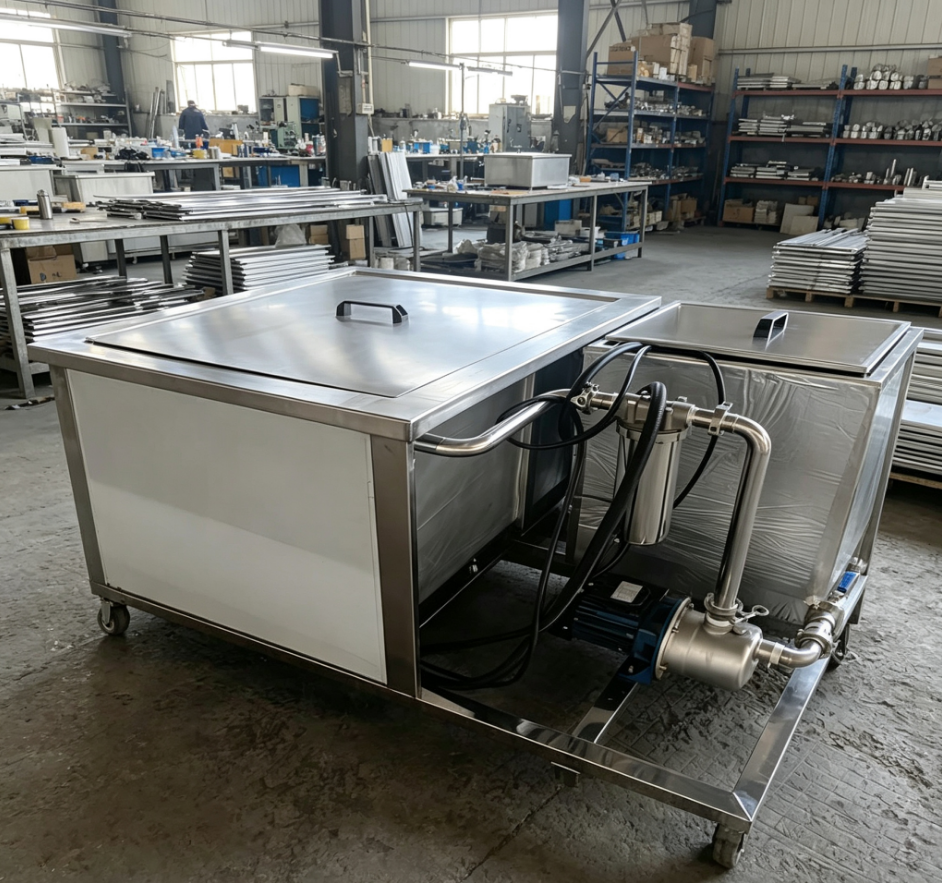
Different production environments call for different coating approaches. The three most common types are spray coating, immersion coating, and roller coating systems.
Machine Type | Coating Method | Best For | Throughput Level |
|---|---|---|---|
Spray Coating Machine | Atomized oil mist applied via nozzles | Flat or simple-geometry parts | Medium to high |
Immersion Coating Machine | Parts submerged in oil bath | Complex shapes, internal cavities | Medium |
Roller Coating Machine | Oil applied through precision rollers | Sheet metal, flat surfaces | High |
Inline Conveyor System | Integrated multi-stage coating | High-volume production lines | Very high |
Each type offers distinct advantages. Spray systems offer flexibility and speed. Immersion systems reach complex surfaces that sprays miss. Roller systems deliver exceptional uniformity on flat stock. For most industrial applications, inline conveyor-based systems provide the best balance of speed, consistency, and automation.
Not all suppliers offer the same level of engineering depth. The difference between a standard machine and a precision-engineered solution often comes down to five factors: customization capability, material quality, automation level, after-sales support, and production capacity.
Customization: Every production line is different. A reputable supplier will assess your part dimensions, material type, required oil film thickness, and throughput targets before recommending a system. Generic, off-the-shelf machines rarely meet the specific demands of precision manufacturing.
Material Quality: Machines that contact oil and metal parts must be built from corrosion-resistant materials—typically SUS304 or SUS316 stainless steel. Inferior materials degrade quickly, contaminate the coating oil, and drive up maintenance costs.
Automation Level: Semi-automatic systems work for lower-volume applications. High-volume manufacturers need fully automated systems with PLC controls, real-time monitoring, and minimal operator intervention.
After-Sales Support: Equipment breakdowns are inevitable. What separates good suppliers from great ones is response time, spare parts availability, and technical support quality.
Production Capacity: A supplier with a large, modern facility can handle complex custom orders and maintain consistent delivery timelines. Among established oil coating machine manufacturers, Hengtai operates from a 10,000㎡ facility in Jiangmen, Guangdong, with a dedicated R&D team and full in-house manufacturing capability.
Hengtai (HT Washer Equipment) has built its reputation on one principle: solving the real production problems that manufacturers face, not just selling equipment. The company's oil coating machines are designed as part of a complete industrial cleaning and surface treatment solution—integrated seamlessly with ultrasonic cleaning machines, high-pressure spray systems, and drying equipment.
This systems-level approach matters. An oil coating machine that isn't properly matched to the upstream cleaning and drying process will underperform, regardless of its individual quality. Hengtai engineers design each solution to work as a unified production line, ensuring that parts arrive at the coating stage clean, dry, and at the right temperature for optimal oil adhesion.
Hengtai's technical advantages include:
Custom engineering: Every machine is tailored to the customer's part geometry, production volume, and surface requirements
Stainless steel construction: SUS304/316 across all product-contact surfaces
PLC automation: Precise control of conveyor speed, oil flow rate, temperature, and cycle timing
Energy efficiency focus: Systems designed to minimize oil consumption without compromising coating quality
Full line integration: Oil coating systems connect directly with Hengtai's cleaning, drying, and water treatment equipment
For buyers sourcing from an oil coating machine factory with verified production credentials, Hengtai holds relevant industry certifications and supports global customers across automotive, electronics, hardware, and precision components sectors.
The sourcing process for industrial equipment takes time. Rushing it leads to mismatched machines, integration problems, and unexpected downtime. Here's a practical approach:
Step 1 – Define your requirements. Document your part dimensions, material, required oil type, production speed (parts per hour), and any space or power constraints.
Step 2 – Request customized proposals. Don't accept standard catalog quotes. Ask suppliers to propose a solution based on your specific requirements.
Step 3 – Review technical documentation. Ask for engineering drawings, material specifications, and control system details before committing.
Step 4 – Verify production capability. A factory visit or virtual tour gives you confidence in the supplier's actual manufacturing standards.
Step 5 – Confirm after-sales terms. Warranty duration, spare parts supply, and remote technical support should all be agreed upon in writing before purchase.
Surface treatment is where product quality is either protected or compromised. A precision-engineered oil coating system doesn't just prevent rust—it extends part life, reduces warranty claims, and demonstrates a commitment to quality that customers notice.
The right equipment partner makes this straightforward. Hengtai's engineering team works directly with customers to design systems that fit their production environment, integrate with existing lines, and deliver consistent results from day one. With over 68 R&D personnel and a commitment to continuous improvement, Hengtai provides more than a machine—it provides a long-term solution.
Contact Hengtai at htkim@ultrasonic-washer.com or visit ultrasonic-washer.com to request a customized consultation and equipment proposal.
Oil coating machines are widely used in automotive parts manufacturing, hardware production, precision machining, electronics components, and bearing manufacturing. Any industry that produces metal parts requiring corrosion protection before storage or shipment benefits from automated oil coating systems.
Spray coating applies atomized oil mist via nozzles, making it well-suited for flat or simply shaped parts at high throughput. Immersion coating submerges parts in an oil bath, providing full coverage for complex geometries and internal surfaces. The right method depends on part geometry and required film uniformity.
Pricing varies significantly based on machine type, level of automation, throughput capacity, and customization requirements. Standard semi-automatic systems cost less than fully automated inline conveyor systems. Contacting a manufacturer directly for a custom quote based on your specific production requirements is the most accurate way to assess cost.
Yes. Most modern oil coating machines are designed for inline integration, connecting directly with upstream cleaning and drying equipment. Suppliers like Hengtai engineer systems specifically to match a customer's existing line layout, conveyor dimensions, and cycle times.
Check for industry certifications, review customer references, request factory visit options, and evaluate the quality of their technical documentation. A supplier with a large, modern facility, a dedicated R&D team, and clear after-sales support terms is significantly lower risk than one without these credentials.


