You can send an email: htkim@ultrasonic-washer.com


Ht Washer Equipment Focus on washing machine equipment solutions.


Views: 0 Author: Site Editor Publish Time: 2026-08-04 Origin: Site


TL;DR:
An ultrasonic parts washer uses high-frequency sound waves to generate microscopic cavitation bubbles that scrub contaminants from complex part geometries—reaching areas that manual or spray cleaning cannot. Hengtai's industrial-grade systems are engineered for precision, efficiency, and automation across automotive, aerospace, and electronics manufacturing.
Grease on a threaded bore. Carbon deposits inside a fuel injector. Metallic debris packed into a bearing channel. These are the cleaning challenges that defeat conventional methods—and the ones that ultrasonic technology was built to solve.
Over the past decade, manufacturers across automotive, aerospace, medical device, and electronics sectors have moved away from labor-intensive solvent cleaning toward automated ultrasonic systems. The reason is simple: parts get cleaner, faster, with less chemical waste. For production environments where cleanliness directly affects product performance and quality control outcomes, that shift is not optional—it is competitive.
This guide breaks down how ultrasonic parts cleaning works, what industries rely on it most, and how to choose the right system for your production needs. It also introduces Hengtai's lineup of industrial cleaning solutions, trusted by manufacturers around the world.
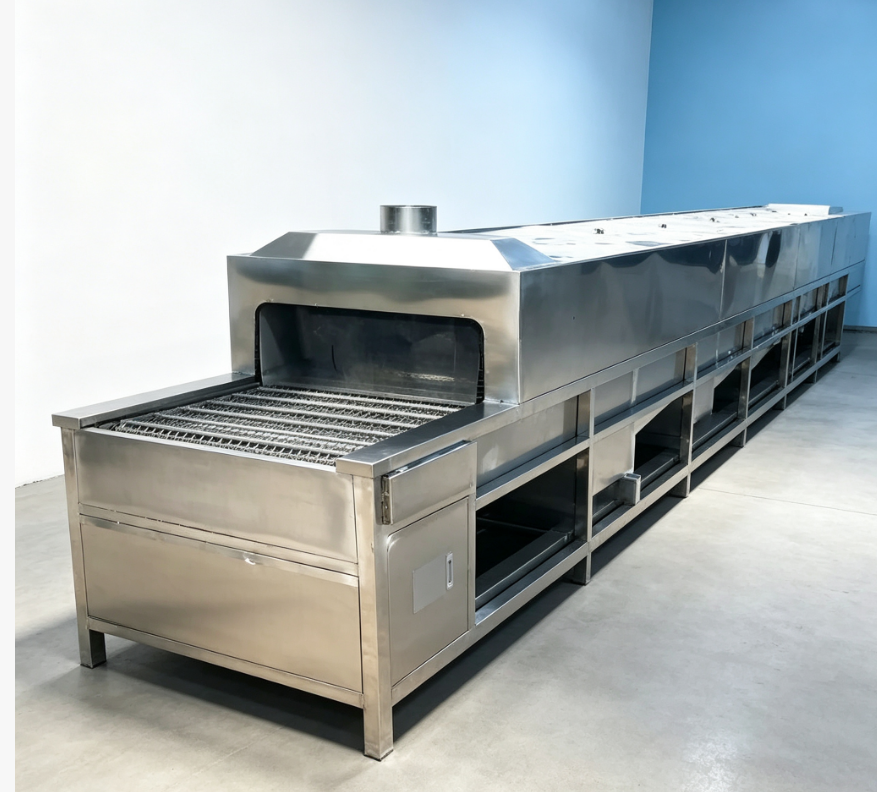
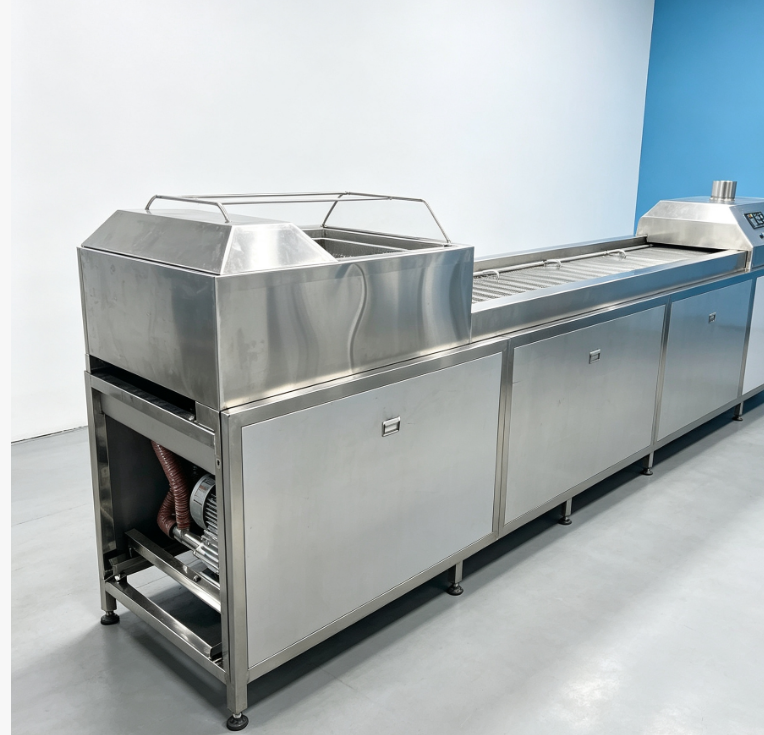
An ultrasonic parts washer works through a process called acoustic cavitation. An ultrasonic generator converts electrical energy into high-frequency sound waves—typically between 28 kHz and 40 kHz—which are transmitted into a liquid-filled tank via transducers mounted to the tank walls or bottom.
These sound waves create rapid pressure fluctuations in the liquid. Microscopic bubbles form during low-pressure phases and implode violently during high-pressure phases. Each implosion releases a concentrated burst of energy that dislodges contaminants from the part surface—including oils, greases, oxides, flux residues, and fine particulate matter.
The key advantage over spray or brush cleaning is penetration. Cavitation bubbles reach into blind holes, threads, internal channels, and complex geometries that no spray nozzle or brush can access. Parts come out uniformly clean across every surface, including those invisible to the eye during inspection.

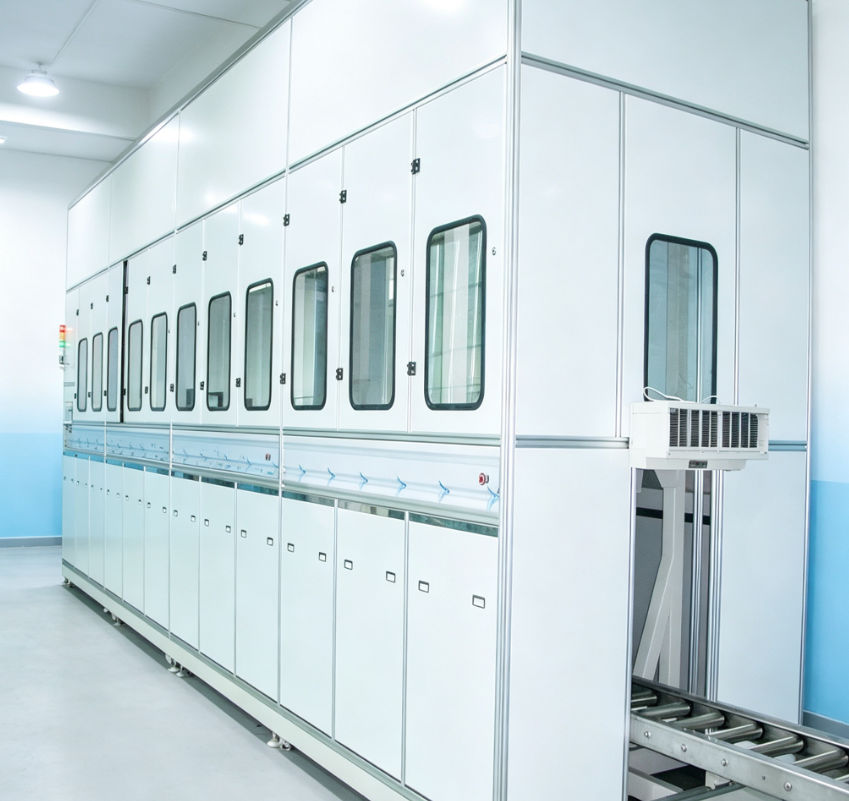
Ultrasonic cleaning has become standard practice in several precision manufacturing sectors. The table below outlines common applications by industry:
Industry | Typical Parts Cleaned | Primary Contaminants Removed |
|---|---|---|
Automotive | Engine blocks, fuel injectors, gears, bearings | Oil, carbon deposits, metal chips |
Aerospace | Turbine blades, hydraulic components, sensors | Grease, oxidation, flux residues |
Electronics | PCBs, connectors, semiconductor components | Flux, solder paste, ionic residues |
Medical Devices | Surgical instruments, implants, endoscopes | Biological matter, sterilization agents |
Watchmaking & Optics | Watch movements, lenses, small mechanical parts | Lubricants, polishing compounds, dust |
Industrial Tooling | Molds, cutting tools, dies | Coolants, machining chips, coatings |
Each of these industries imposes strict cleanliness specifications—often defined by particle size limits, surface contamination thresholds, or ISO cleanliness classes. Ultrasonic systems can be validated and documented to meet these requirements, which manual cleaning cannot reliably achieve.
Not all ultrasonic systems are configured the same way. Selecting the right machine depends on part size, production volume, contamination type, and level of automation required.
Single-tank systems work well for low-volume or batch cleaning operations. Multi-tank systems—where parts move sequentially through ultrasonic cleaning, rinsing, and drying stages—suit high-throughput production lines and deliver more consistent results when cleanliness standards are demanding.
Conveyor-type configurations transport parts through cleaning and drying stages automatically, without manual handling between steps. These systems reduce labor costs and are well suited to continuous production environments.
For large or heavy components, robotic arm and overhead-type configurations lift and lower parts into cleaning tanks with precision. These systems handle parts that cannot be conveyed on a belt without risk of damage.
Hydrocarbon-based systems use petroleum-derived solvents instead of water-based cleaning agents. They are particularly effective for removing light oils and machining fluids from precision metal parts, and they leave no water residue—a requirement for components sensitive to corrosion.
Hengtai manufactures all of these configurations. With a 10,000 m² production facility and a dedicated R&D team, Hengtai provides custom-engineered solutions across each machine type—designed to meet the specific throughput, chemistry, and automation requirements of each client.
Choosing the right ultrasonic cleaner starts with a clear picture of four variables: part geometry, contamination type, production volume, and post-cleaning requirements.
Part geometry determines tank size and configuration. Complex internal geometries benefit from higher-frequency systems (40 kHz) that produce smaller, more penetrating cavitation bubbles. Larger, less intricate parts can be cleaned effectively at lower frequencies (28 kHz) with greater cavitation energy.
Contamination type governs cleaning chemistry. Heavy grease and burnt-on carbon require a different cleaning agent than ionic flux residues on a PCB. Hengtai's engineering team evaluates contamination profiles during the consultation process and recommends compatible cleaning solutions.
Production volume determines whether a batch system or a fully automated inline system delivers the better return on investment. For manufacturers running high daily volumes, automation reduces per-unit cleaning cost significantly.
Post-cleaning requirements cover rinsing and drying. Parts that cannot carry cleaning agent residue into the next process stage require dedicated rinsing tanks. Parts destined for coating or assembly may require hot-air drying or vacuum drying to meet surface preparation standards.
Hengtai—operating as HT Washer Equipment—has built its reputation on one core principle: solving the complete cleaning challenge, not just supplying equipment. Every project begins with a process audit. Hengtai's engineers assess the part, the contamination, the production rate, and the downstream process requirements before recommending a system configuration.
The result is a one-stop solution that covers cleaning, rinsing, drying, and water treatment as an integrated line. Clients avoid the integration headaches that come with sourcing equipment from multiple vendors.
Hengtai's ultrasonic cleaning machines are built using SUS304 and SUS316 stainless steel construction, with transducer arrays configured to deliver uniform cavitation density across the entire tank volume. The company's systems operate at 28 kHz and 40 kHz, with generator power ranging from 300 W to 2,400 W depending on the application. All systems are CE-certified and designed for energy efficiency to reduce operating costs over the equipment lifecycle.
The transition from solvent wiping or spray cleaning to ultrasonic technology is not disruptive—it is additive. Most manufacturers see a measurable improvement in cleanliness levels within the first production run. Over time, the benefits compound: reduced rework rates, fewer field failures traced to contamination, lower chemical consumption, and less manual labor.
The right partner makes that transition straightforward. Hengtai provides process validation support, operator training, and ongoing technical service to ensure systems perform to specification from day one.
Most industrial applications use 28 kHz or 40 kHz. Lower frequencies (28 kHz) generate larger cavitation bubbles with more mechanical energy—better for heavy contamination on robust parts. Higher frequencies (40 kHz) produce smaller, more precise bubbles suited to delicate components or tight geometries. Some multi-tank systems use both frequencies across different stages.
Properly configured ultrasonic systems do not damage parts. The risk of surface damage is highest when the wrong frequency, power level, or cleaning chemistry is used. Hengtai's engineering team calibrates each system to match the part material and geometry, minimizing the risk of erosion or surface alteration.
Cycle time varies by contamination load and part complexity, but most industrial cycles run between 5 and 15 minutes per batch. Automated conveyor-type systems achieve continuous throughput, eliminating the batch cycle concept entirely for high-volume production lines.
Yes. Water-based ultrasonic cleaning significantly reduces the use of volatile organic compounds compared to solvent-based methods. Hengtai also supplies water treatment equipment that filters and recycles cleaning liquid, reducing wastewater discharge and lowering operating costs.
With proper maintenance, industrial ultrasonic equipment typically operates for 10 or more years. Key maintenance tasks include monitoring transducer performance, replacing cleaning fluid on schedule, and inspecting tank integrity. Hengtai provides maintenance guidance and spare parts support to extend equipment service life.
Ultrasonic parts washing has moved from specialized technique to manufacturing standard—and for good reason. The cleaning results are more consistent, the process is more controllable, and the total cost of ownership is lower than legacy methods over any meaningful time horizon.
Selecting the right system configuration is where manufacturers gain or lose that advantage. Hengtai's team brings the process expertise to make that selection accurately, backed by a full product range and a facility built for custom engineering.
Contact Hengtai at htkim@ultrasonic-washer.com or visit www.ultrasonic-washer.com to discuss your cleaning application and request a system recommendation.


