You can send an email: htkim@ultrasonic-washer.com


Ht Washer Equipment Focus on washing machine equipment solutions.


Views: 0 Author: Site Editor Publish Time: 2026-07-15 Origin: Site


TL;DR:
A high capacity spray wash system uses pressurized fluid jets to remove oils, chips, and contaminants from industrial parts at high throughput. These systems are widely used in automotive, electronics, and metalworking industries where cleanliness standards are strict and production volumes are large. Hengtai offers fully customizable spray cleaning solutions built for demanding manufacturing environments.
Surface contamination is one of the most underestimated threats in manufacturing. A thin film of cutting oil or a few metal chips left on a component before assembly or coating can cause adhesion failures, corrosion, or premature part wear. As production volumes climb, manual cleaning becomes impossible to scale—and that's where industrial spray cleaning steps in.
Spray-based cleaning systems use high-pressure fluid jets to dislodge and flush away contaminants quickly and consistently. They work across a broad range of part geometries, materials, and contamination types, making them one of the most versatile tools in modern industrial production. This article breaks down how these systems work, what to look for when selecting one, and how Hengtai's equipment can meet the demands of high-volume operations.

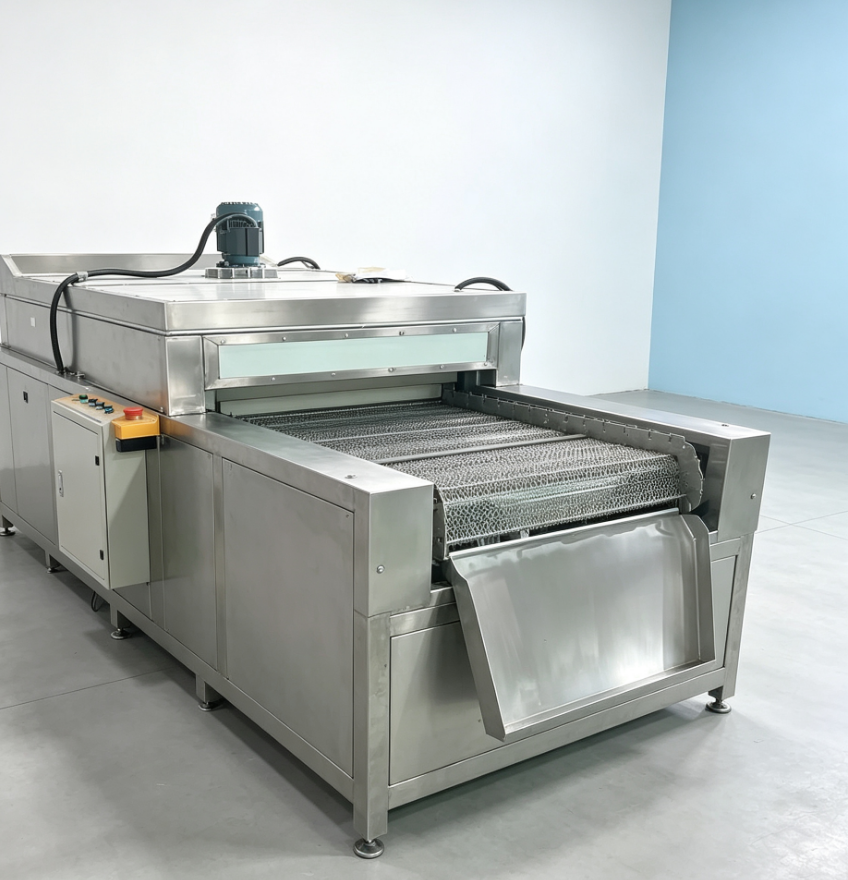
Spray cleaning is not limited to one sector. The technology appears wherever part cleanliness directly affects product quality or downstream process performance.
Automotive manufacturing is the largest user. Engine blocks, transmission components, brake parts, and stamped metal pieces all require degreasing and chip removal before assembly. Even microscopic debris can cause tolerancing issues in precision-fit components.
Electronics and PCB production demand solvent or aqueous spray cleaning to remove flux residues after soldering. Contamination at this scale is invisible to the naked eye but can cause short circuits or corrosion over time.
Metal fabrication and machining operations generate cutting fluids, lubricants, and swarf that must be removed before parts move to heat treatment, plating, or inspection.
Medical device manufacturing holds perhaps the strictest cleanliness requirements of all. Spray cleaning ensures that implants and surgical tools meet biocompatibility standards before sterilization.
Across all these sectors, a reliable high capacity spray wash system is not a luxury—it's a production necessity.
The operating principle is straightforward: pressurized cleaning fluid is delivered through nozzles arranged in a fixed pattern around a conveyor or rotating basket. Parts pass through the spray zone, where jets attack contaminants from multiple angles simultaneously.
Most industrial systems operate in three stages:
Pre-wash — A high-pressure rinse removes loose debris and bulk contamination.
Main wash — Heated aqueous solution or solvent dissolves oils and fine particles under sustained spray pressure.
Final rinse and drying — Clean water removes detergent residue, followed by hot air or infrared drying to prevent surface oxidation.
Pressure levels typically range from 1 to 20 bar, depending on the contamination load and part material. Nozzle configuration, spray angle, and conveyor speed are all adjustable to optimize cleaning performance for specific components.

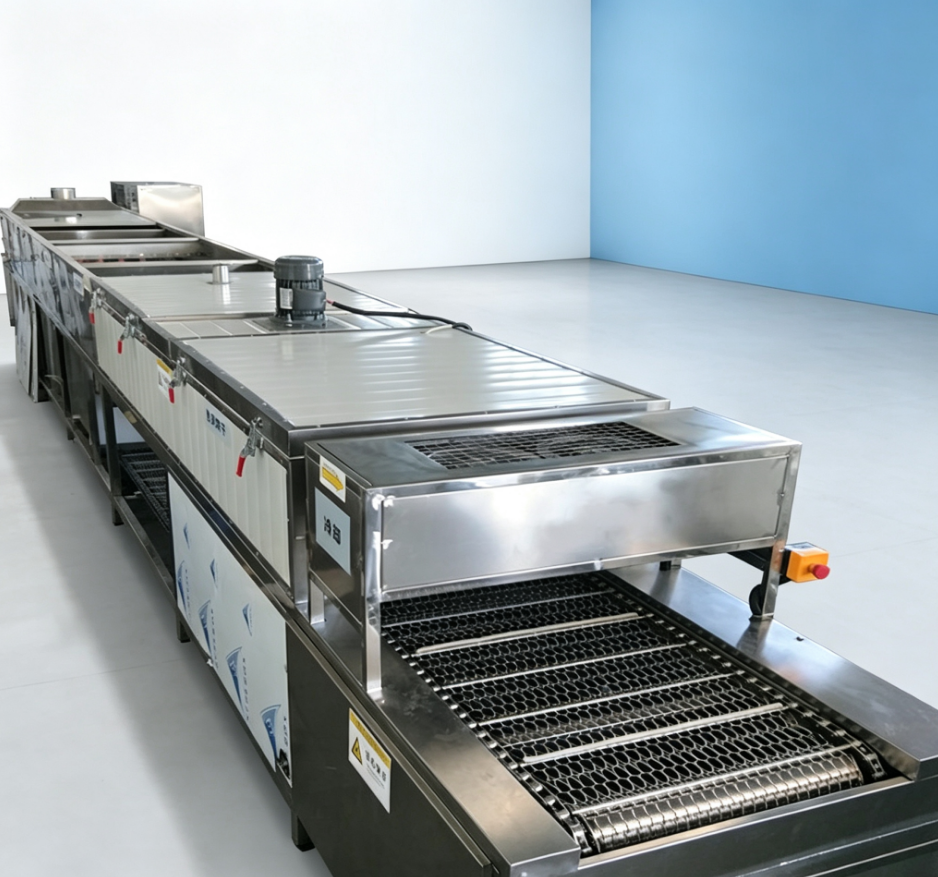
Choosing the right system starts with matching equipment specifications to your production requirements. The table below outlines the most important parameters to evaluate:
Parameter | Typical Range | Why It Matters |
|---|---|---|
Operating pressure | 1–20 bar | Determines cleaning intensity for different contaminant types |
Tank capacity | 50–2,000 L | Affects how long between fluid changes in continuous production |
Conveyor speed | 0.5–5 m/min | Controls throughput and contact time with cleaning fluid |
Temperature range | Room temp–95°C | Higher temperatures improve degreasing effectiveness |
Drying method | Hot air / infrared | Prevents oxidation and prepares parts for next process stage |
Material compatibility | Steel, aluminum, plastics | Must match your part substrate to avoid chemical damage |
Automation level | Semi-auto / fully automatic | Impacts labor requirements and process consistency |
Reviewing these specifications against your actual production data—not just nominal values—will prevent costly mismatches after installation.
Not all spray cleaning equipment performs equally under sustained industrial use. Several design features separate systems built for long-term production from those suited only to light-duty applications.
Nozzle design and arrangement are critical. Fixed flat-fan nozzles work well for flat parts, but rotating or oscillating nozzle heads provide more complete coverage on complex geometries. A well-configured spray cleaning machine will adjust nozzle placement for the specific part family being cleaned.
Fluid management systems extend solution life and reduce operating costs. Filtration units, oil skimmers, and automatic concentration control all help maintain cleaning effectiveness over longer production runs without frequent fluid replacement.
Enclosure and exhaust design matter for operator safety and facility compliance. Systems handling heated aqueous solutions or solvent-based chemistries must contain mist and vapor effectively.
Integration capability with upstream and downstream equipment—conveyors, robotic loading systems, drying lines—determines how smoothly spray cleaning fits into an automated production cell.
Hengtai (HT Washer Equipment), headquartered in Jiangmen, Guangdong, China, has built its reputation on one-stop industrial cleaning and drying solutions. Operating from a 10,000 m² modern manufacturing facility, Hengtai designs, engineers, and produces equipment for clients across automotive, electronics, medical, and general metalworking industries.
Hengtai's product line covers conveyor-type spray systems, overhead-type configurations, and integrated cleaning-and-drying lines. Each system is engineered for a specific production context—high-mix low-volume shops have different requirements than high-volume dedicated lines, and Hengtai's customization capability addresses both.
A spray washing machine from Hengtai can be paired directly with tunnel drying ovens, water treatment units, and oil coating machines to form a complete post-processing line. This integration eliminates transfer handling between stations, reduces contamination risk, and supports tighter cycle time control.
Hengtai's engineering team supports clients through process selection, equipment specification, installation, and commissioning. For manufacturers dealing with complex cleanliness requirements or high-throughput targets, this end-to-end support is a practical advantage over buying standalone equipment from multiple suppliers.
Spray cleaning performance depends on matching system design to the actual contamination type, part geometry, production volume, and downstream process requirements. Generic equipment rarely delivers optimal results in specialized manufacturing environments.
The most effective approach is to consult with a supplier capable of analyzing your specific cleaning challenge and proposing a configured solution—rather than selecting from a fixed product catalog. Hengtai's team is available to review your application and recommend a system designed around your production goals.
Contact Hengtai at htkim@ultrasonic-washer.com or visit ultrasonic-washer.com to request a technical consultation.
A high capacity spray wash system removes surface contaminants—oils, metal chips, flux residues, and particles—from industrial parts at production-scale throughput. These systems are used before assembly, coating, heat treatment, or inspection to ensure parts meet cleanliness specifications.
Spray cleaning uses pressurized fluid jets to physically dislodge contaminants. Ultrasonic cleaning uses high-frequency sound waves to generate cavitation bubbles that implode on surfaces. Spray systems handle higher throughput and work well on large or irregularly shaped parts. Ultrasonic systems excel at cleaning complex internal geometries and fine features at smaller batch sizes.
Most industrial spray cleaning machines support aqueous alkaline detergents, neutral detergents, and deionized water rinses. Some systems are engineered for solvent-based chemistries. Compatibility depends on the tank material, seal types, and pump specifications—always confirm with the equipment manufacturer before selecting a cleaning agent.
With proper maintenance—regular nozzle inspection, fluid management, and filter replacement—a well-built industrial spray cleaning system can operate reliably for 10 to 15 years or more. Component quality and operating conditions are the primary factors affecting service life.
Yes. Hengtai designs spray cleaning systems to customer specifications, including conveyor width, tank dimensions, pressure settings, nozzle configuration, and integration with drying or coating lines. Customization is available for both small-batch and high-volume continuous production environments.


