You can send an email: htkim@ultrasonic-washer.com


Ht Washer Equipment Focus on washing machine equipment solutions.


Views: 0 Author: Site Editor Publish Time: 2026-08-06 Origin: Site


TL;DR:
Energy saving ultrasonic machines from China combine cavitation-based cleaning technology with advanced power management systems to deliver deep, consistent cleaning at significantly lower operating costs. Manufacturers like Hengtai offer fully customizable solutions across industries including automotive, electronics, and precision engineering.
Modern manufacturing plants face a persistent challenge: keeping components clean without driving up energy bills or slowing down production lines. Traditional cleaning methods—chemical baths, manual scrubbing, high-pressure rinsing—often require heavy resource input and still fall short when it comes to micro-level contamination.
Ultrasonic cleaning technology solves this problem at its root. By generating high-frequency sound waves that create millions of microscopic bubbles, these machines agitate and remove contaminants from surfaces with remarkable precision. When paired with smart energy management systems, the result is a cleaning solution that performs better and costs less to run.
China has become the global hub for this technology. With deep manufacturing infrastructure, strong R&D investment, and competitive pricing, Chinese manufacturers now supply ultrasonic cleaning systems to factories across Europe, North America, Southeast Asia, and beyond. Among them, Jiangmen Hengtai Cleaning Equipment Co., Ltd. has established itself as a trusted name—offering one-stop industrial cleaning and drying solutions from its 10,000㎡ facility in Guangdong.

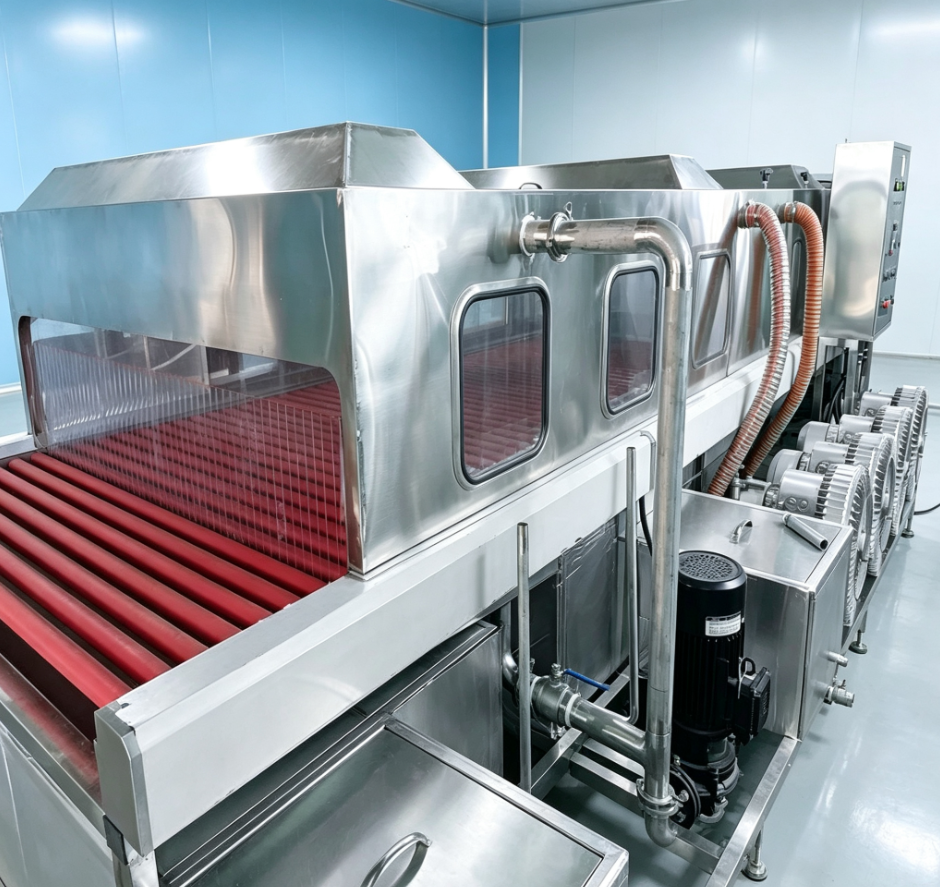
Conventional industrial washers rely on constant heat, mechanical agitation, and large volumes of chemical solution to achieve adequate cleaning results. Ultrasonic systems work differently. The cleaning action comes from acoustic cavitation—a physical process that does the heavy lifting without requiring sustined high-power input.
Modern energy saving ultrasonic machine china designs incorporate several efficiency-driven features:
Frequency modulation: Adjustable frequencies (typically 28 kHz or 40 kHz) allow operators to match power output to the specific contamination type, avoiding unnecessary energy use.
Digital generator control: Smart generators monitor load in real time and reduce output during idle or partial-load cycles.
Insulated tank construction: Reduced heat loss during aqueous cleaning cycles cuts the energy needed to maintain solution temperature.
Automated shutdown: Timer-based and sensor-triggered shutdowns prevent machines from running when no parts are present.
The cumulative effect is significant. Compared to conventional spray or immersion washing systems, well-designed ultrasonic cleaners can reduce energy consumption by 30–50% under equivalent throughput conditions.

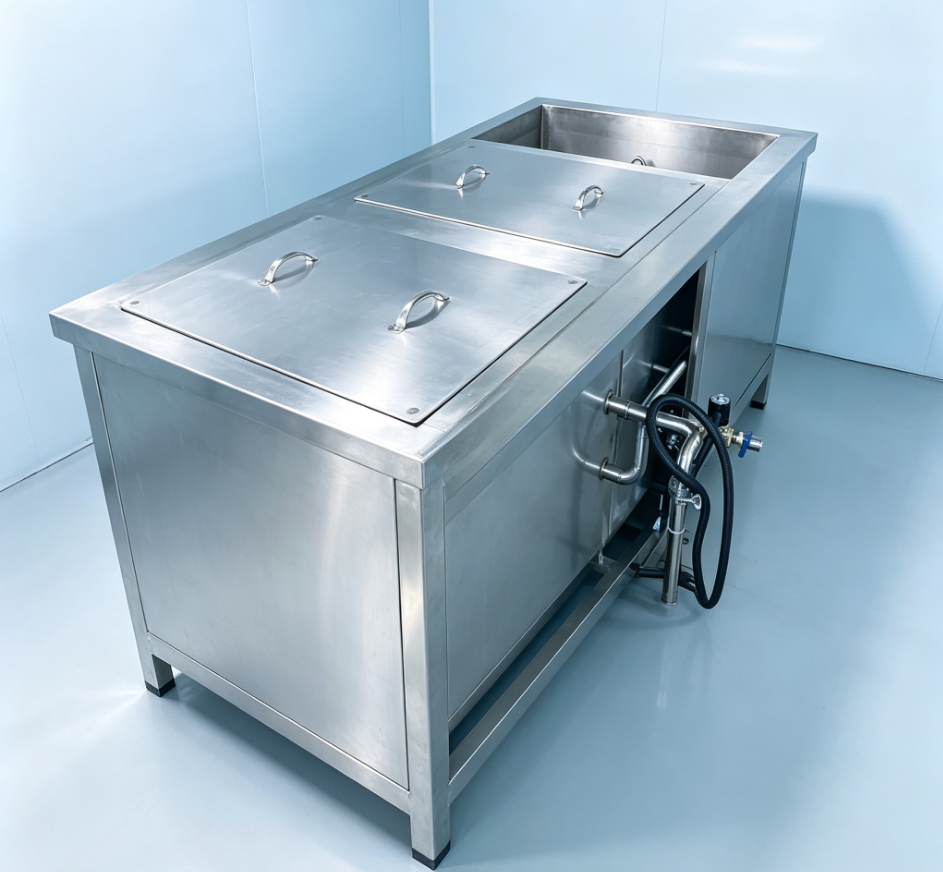
The answer depends on how tight the cleanliness specification is and how complex the part geometry is. Ultrasonic cleaning excels wherever manual or spray cleaning struggles to reach.
Here's a breakdown of common applications:
Industry | Typical Parts Cleaned | Key Contaminants Removed |
|---|---|---|
Automotive | Engine blocks, fuel injectors, gears | Oil, carbon deposits, metal particles |
Electronics | PCBs, connectors, sensors | Flux residue, dust, soldering byproducts |
Medical Devices | Surgical instruments, implants | Biological matter, sterilization residue |
Aerospace | Turbine blades, hydraulic components | Grease, oxide layers, machining debris |
Optics | Lenses, prisms, coatings | Fingerprints, polishing compounds |
Jewelry | Rings, chains, clasps | Skin oils, polishing paste, tarnish |
A professional ultrasonic cleaner machine designed for automotive use, for instance, requires a different tank volume, frequency range, and basket configuration than one used in a medical device facility. This is why customization matters—and why manufacturers like Hengtai build to specification rather than offering only off-the-shelf units.
Hengtai's product range covers multiple cleaning configurations: conveyor-type systems for high-volume production lines, robotic arm models for precise load handling, overhead-type machines for heavy or awkward components, and semi-automatic units for smaller operations. Each is engineered with energy efficiency as a design priority, not an afterthought.
Standard ultrasonic cleaning involves immersing parts in a tank filled with cleaning solution. Ultrasonic vibrating nozzle technology takes a different approach: it applies ultrasonic energy directly to a spray stream. The nozzle vibrates at ultrasonic frequencies, atomizing the liquid into fine droplets and enhancing its penetration into complex geometries.
This method is especially useful when full immersion is impractical—either because parts are too large, too delicate, or part of a continuous inline process where stopping to submerge components isn't viable.
Sourcing ultrasonic vibrating nozzle equipment china from established manufacturers ensures that the transducer quality, nozzle material, and frequency calibration meet the demands of industrial-scale operation. Low-quality transducers degrade quickly under continuous use, which leads to uneven cleaning, increased downtime, and higher replacement costs.
Hengtai's engineering team supports customers in selecting the right configuration for their specific production environment—factoring in part size, throughput requirements, contamination type, and available floor space.
Not all suppliers offer the same level of technical support, build quality, or after-sales service. Before placing an order, buyers should evaluate:
Certifications: Look for ISO compliance and CE marking where applicable.
Customization capability: Can the manufacturer adjust tank size, frequency, material grade (SUS304 vs. SUS316), and control systems to your spec?
Warranty terms: Reputable suppliers offer multi-year warranties. Hengtai, for example, backs its equipment with comprehensive warranty coverage and ongoing technical support.
Factory transparency: Virtual or in-person factory tours help verify production capability. Hengtai offers a 360° virtual factory tour directly from its website.
References and case studies: Ask for documented deployments in your industry vertical.
China's manufacturing ecosystem supports faster lead times and more competitive pricing than most alternative sourcing regions, but the quality gap between suppliers can be wide. Working with an established manufacturer with a documented track record reduces that risk substantially.
Hengtai (Jiangmen Hengtai Cleaning Equipment Co., Ltd.) specializes in end-to-end industrial cleaning and drying solutions. The company's product portfolio spans ultrasonic cleaning machines, high-pressure spray systems, tunnel drying ovens, water treatment equipment, oil coating machines, and full industrial cleaning and drying lines.
What sets Hengtai apart is the integration of these systems. Rather than purchasing a cleaning machine from one supplier, a dryer from another, and a water treatment unit from a third, customers can source a fully coordinated production line from a single engineering team. This simplifies commissioning, reduces compatibility issues, and gives the customer a single point of contact for technical support.
With R&D investment consistently prioritized and a dedicated team working on new product development, Hengtai continues to push the performance and efficiency boundaries of industrial cleaning technology.
Contact Hengtai at htkim@ultrasonic-washer.com to discuss your application requirements.
Pricing varies significantly based on tank size, automation level, frequency configuration, and material grade. Entry-level semi-automatic units start at a few thousand USD, while fully automated multi-stage conveyor systems for high-volume production can run into the tens of thousands. Hengtai provides custom quotes based on your specific application and volume requirements.
28 kHz is better suited to heavy-duty cleaning of larger, more robust parts—it generates stronger cavitation forces. 40 kHz produces finer bubbles with less mechanical impact, making it preferable for delicate components like electronic assemblies or precision optics. Some Hengtai systems support dual-frequency operation for added flexibility.
A well-maintained machine from a reputable manufacturer typically delivers 8–15 years of reliable service. Transducer longevity depends heavily on operating conditions—continuous high-intensity use accelerates wear. Regular maintenance, appropriate cleaning solution management, and periodic transducer inspections extend service life substantially.
Most metals, ceramics, and hard plastics clean well with ultrasonic technology. Certain soft materials, rubber compounds, and porous substrates may be damaged by cavitation energy. Hengtai's engineering team can advise on material compatibility before recommending a specific configuration.
Yes. Hengtai supplies customers across Europe, the Middle East, Southeast Asia, and North America. The team handles export documentation, packaging, and logistics coordination to ensure equipment arrives safely and on schedule.


